I've waxed lyrical about the bullet train (Shinkansen) before so won't do so again other than to say they were terrific and the journey from Kyoto to Odawara was 2 hours so it must have been some 500 miles away... seems unreal to travel that fast on a train that comfortable!
 |
| Would you say that looks like a snake? |
The scenery was anything but spectacular though. Truth be told, the flat bits in Japan in between the hilly/mountainous parts are where most people live and are pretty ugly. True there is green around but if you look really closely you will see that in fact that greenery is actually rice paddies not something like parks or people's gardens.
 |
| Rice paddies by the railway track |
To get to Hakone, we had to change at Odawara for a local train and then a cable car. The local train chugged up the mountain until it got too steep which is where the cable car took over. Usually there's a funicular that takes you on from the top of the cable car but with volcanic activity present, they weren't running which was a pity.


We were staying at the Hyatt Regency in Hakone and it did take a little while finding the place as there were no signs in English anywhere but we did and it was nice.


Our one day of activity thankfully was really nice and each of us went our own separate ways; Gordon and Thelma, Indy and Cat, Viv and I. We planned to go straight up to the top of the mountain following which we'd take the bus to a boat across an alpine lake where the views of Mt. Fuji were meant to be spectacular. From there we'd actually go into Hakone by the Lake and see what transpired after.

The boat ride was fun. Being on board a pirate ship in Japan was sort of weird but really pleasant however one disappointment was at each of the supposed viewing points, Mt. Fuji was actually not where it was supposed to be. It's a huge volcano so you really shouldn't be able to miss it as it dwarfs everything all around. But we couldn't find it.


 |
| Lake Ashi and the pirate ship |
First stop was the Check Point in Hakone. This was 300 years old (but obviously rebuilt many times) and served the purpose of keeping the local women in. There was only one road in (along the lake shore) and one out. Why the then Shogun wanted to keep the women in was a mystery. If a man was discovered trying to help, he would be executed (actually crucified). If a woman, she would be sold into sexual slavery as a prostitute. Tough measures indeed but according to the guide, there were plenty of people trying to escape.
 |
| Nobody knew what color clothes people wore back then so the diorama shows everyone as grey |
 |
| Mt. Fuji is 3,500 metres tall and should be right about where that little peak is opposite. It actually should dwarf that little peak but I couldn't see it at all |
From there it was a short walk to the Imperial Gardens which were pretty nice except for the fact that I navigated a wrong turning somewhere so we walked around in circles for quite some time wondering where we were before finding the summer palace (actually no more than a nice country house size) overlooking the lake.
 |
| The view from the palace balcony again of Lake Ashi and where Mt. Fuji really ought to be... but I just don't see it |
Not many blooms were out so we weren't able to enjoy the full splendour of what propbably was in spring and early summer a gorgeous display. Still it was pretty nice.
Our final stop by the lake was at another temple which had another of those big orange monuments in the lake (like at Miyajima). It was called Hakone Jinja and was very pretty as usual with all the regular accoutrements that we had become accustomed to.

We took the bus (actually two buses) from the temple to the Picasso Museum in the mountains (yes, really). The entire area is a playground for people from Tokyo as it is less than 2 hours by car or train so has a wide range of sophisticated attractions. There is a huge onsen resort built to accomodate more than 5,000 people at one time in the mountains above Lake Ashi as well that we transited en route to the museum.
It was built by a Picasso fan who just happened to own more than 300 pictures, etchings, sketches and sculptures by the great man (he was hugely prolific by the way so there is lots of Picasso stuff out there) and he wanted to share them with the world. So he and some others created this art museum including the Picasso Pavilion and quite a number of very large out door sculptures that were dotted around a large park area.
 |
| I did like the sculpture of the two fried eggs, sunny side up |
It must be said that the Picasso's weren't his finest by any means but they were apparently undoubtedly Picasso's. I did wonder why if he was so prolific that his work commands such enormous prices. I would have thought scarcity would have been a better thing to drive up price but clearly I have it wrong for Picasso (by the way he was also prolific in his love life and marriages!).
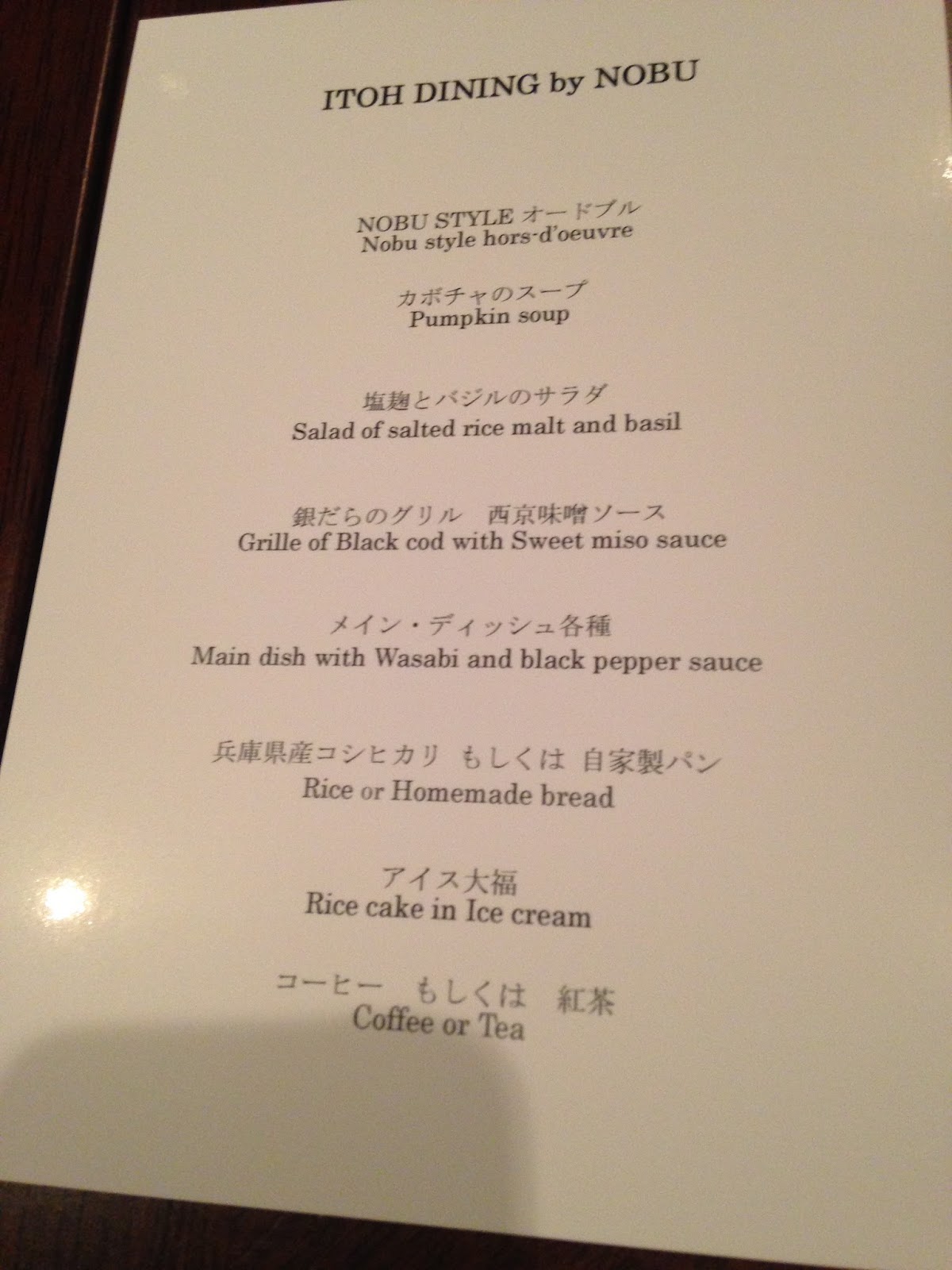
Another bus, a train and our friendly cable car took us back to the hotel where we joined the rest of the party to head out for another highlight: our dinner at Nobu, a Michelin starred restaurant found by Indy which just happened to be around the corner (I did mention this area is a play ground for Tokyo's rich and famous, didn't I?). And equally importantly our Kobe beef experience.
It was discovered by an Englishman named Edward Kirby in 1868 (of course it would be an Englishman, how couldn't it be?) who bought a steer from a farmer in Hyogo prefecture, a specific requirement for Kobe beef. Since then rules have been drawn up: cannot weigh more than 470 kg, cannot be older than 5 years old and must have a certificate of authenticity and birth certificate upon which is (wait for it) a copy of its inked nose print.
The cows are fed beer (to aid digestion but only a little) and get massages (only in summer when the cows eat less) to reduce stress. The result is a cow with more fat that any other cow so the beef cuts are that much more tender and cook faster.
You have to have it medium rare (I could feel Viv bridling at this point as she likes her beef medium well to well).
 |
| Kobe beef, medium rare |
It really did melt in the mouth.
Mind you, the bill was eye watering! Just as well the Yen is depressed against the US dollar at the moment. Come on Mr. Abe, keep buying those bonds.