Tuesday, June 25, 2013

The Beaches

If anyone rolled their eyes at the thought of beaches in Toronto, I'd have agreed with them up until yesterday when Viv and I actually walked them.  They were both real and fantastic.

Toronto has a series of 'Discovery Walks' that take you to various places around the 3rd largest city in North America (only behind NYC and LA, just over taken Chicago) and the one we chose was the Eastern Ravine and Beaches.

To get there we took the subway to Main Street Station on the Bloor Line and then the 64 Bus south to Kingston Road where we picked up the start of the trail at Glen Stewart Ravine -- an ancient now dry river bed down to the sea.


This was a 9.1 km trail taking us down to the Beaches and then along to Kew Gardens, Woodbine Beach, Ashbridge's Bay Park before taking us back to Queen Street and the street car back to downtown Toronto.

This was each of the 3 public transport mechanisms on a Sunday and you know, it all worked beautifully.  The subway whirred like clockwork.  The bus from Main Street was both well sign posted and turned up within a couple of minutes.  The bus driver told us where to get off and we were able to walk to the start of the trail all within 5 minutes of exiting the bus.

Fantastic!!


I've developed a love for plants and at a time when it rains a lot and it is sunny a lot, this is just perfect for plants who were just magnificent.


The beaches were a bit grimy to be honest but what do you expect at a lake?  Plenty of paddle boarders and we even found a nice looking tennis club (at Kew Gardens).


Woodbine Beach

All in all a lovely Sunday walk that took our 9.1 kms and added a further 3-4 kms when we marched around King/Queen Street looking for a place to eat, a movie house (SuperMan 3D) and ultimately home.

Great day!!


VQA

Years ago when we spent Christmas with our friends John, the wine merchant, and Fong in a log cabin in Vermont, each day we took turns to cater for the group.  That included food and wine.  On our turn we bought 2 jugs of Sebastiani wine, one white and one red, for the simple reason each jug had a finger handle you could swing the jug on for easier drinking.  This was in the days when California wine was viewed with disdain and Sebastiani's finest was not really that fine.  These days of course things have changed but our reputation with John was shot from that moment on.  Never again would we be able to bring a bottle of wine over to his house when invited to dinner.

Time has moved on and we are still friends but the reputation lingers so each time we unveil a new 'discovery' John adopts a world weary expression as he carefully sips.  This time though we've found something special!!

VQA is the Ontario equivalent to Appelation Controllee in France -- a basis by which wine is graded.  Anything graded VQA has to have contents in approved levels for preservatives, grape varietals, etc, so its a big thing for Niagara on the Lake (NOTL) wineries.

The first thing you see when you hit wine country Ontario... grape vines

The tour Viv booked took us first to Pondview Winery (www.pondviewwinery.com).  This is a fairly new winery like many in the region and specializes in whites.  The tasting took in Rose and Riesling/Gewurtztraminer blends which were stand outs for us.

The tour guide described the fields and showed us each grape varietal on the vine.  Its a short season due to the weather so the grapes were pretty young on the vine.

Tiny seedlings in June, these things grow to the luscious fruit you see in a couple of months

The NOTL region fortunately is dry and with the Niagara Escarpment blocking some of the colder winds, the area is ideal for wine growing.  The same escarpment stops some of the really cold winds coming in but enables grapes to be picked in January each year when they are shriveled and basically 100% sugar juice, just ideal for ice wine in fact.  This region is renowned for it.

Each field has a very curious windmill sticking up.  Apparently these things when turned on drag heat down in particularly cold weather thereby saving the grapes which otherwise would be turned to little green rocks.  However they make a huge noise and are very expensive to run so no winery wants to run them and no neighbor wants to be near them.  But they are there... and so are the neighbors.

The neighbors are currently grinning and bearing it

Pondview gave us a nice appetizer with our tasting, the local cheese, Niagara Gold, a hard cheese, being particularly nice.

The couple to the right are ex-Bermuda folk on their honeymoon.  Who'd have thought it?

Next up was Hinterbrook. "Located on the rich shoreline soils of the Niagara Lakeshore sub-appellation, Hinterbrook crafts great quality wines with an emphasis on environmental stewardship.  A 10 kilowatt solar panel generates enough electricity to replace the winery's power needs throughout the year".  Very impressive actually.  The guide chatted whilst the very large panel whirred and clanked and shifted direction every few minutes to attract the optimum level of solar energy.  He also said they were net subscribers to the power grid which for a high tech (eco-friendly stuff aside) winery I thought was pretty darned impressive.

I enjoyed the pinot and Riesling particularly (www.hinterbrook.com).

Final visit was the red roofed Pilliterri Estates Winery (www.pilliterri.com), the largest estate producer of Icewine (has to be spelled in one word with a capital 'I' otherwise its a fake, apparently) in Canada exporting to 30+ countries.  Unlike the others Mr. P has been doing this since 1993 so is long standing by comparison.  The facility is pretty impressive as it clearly has benefited from longish patronage.

The family cart...

Mr. P himself comes from Sicily where the concept of the cart is ingrained but these days hideously expensive to recreate.  Having recently seen immense numbers of these in Costa Rica I wondered if they'd thought about looking elsewhere.  However the young man who did the intro's hadn't heard of Costa Rica and looked at me in a fairly bemused fashion when I mentioned it.

But Pilleterri is famous correctly for Icewine which was incredibly fantastic as was the Pinot Gris, the wine of the year.  It was just lovely and I hope that you know who (from the start of this blog) agrees.

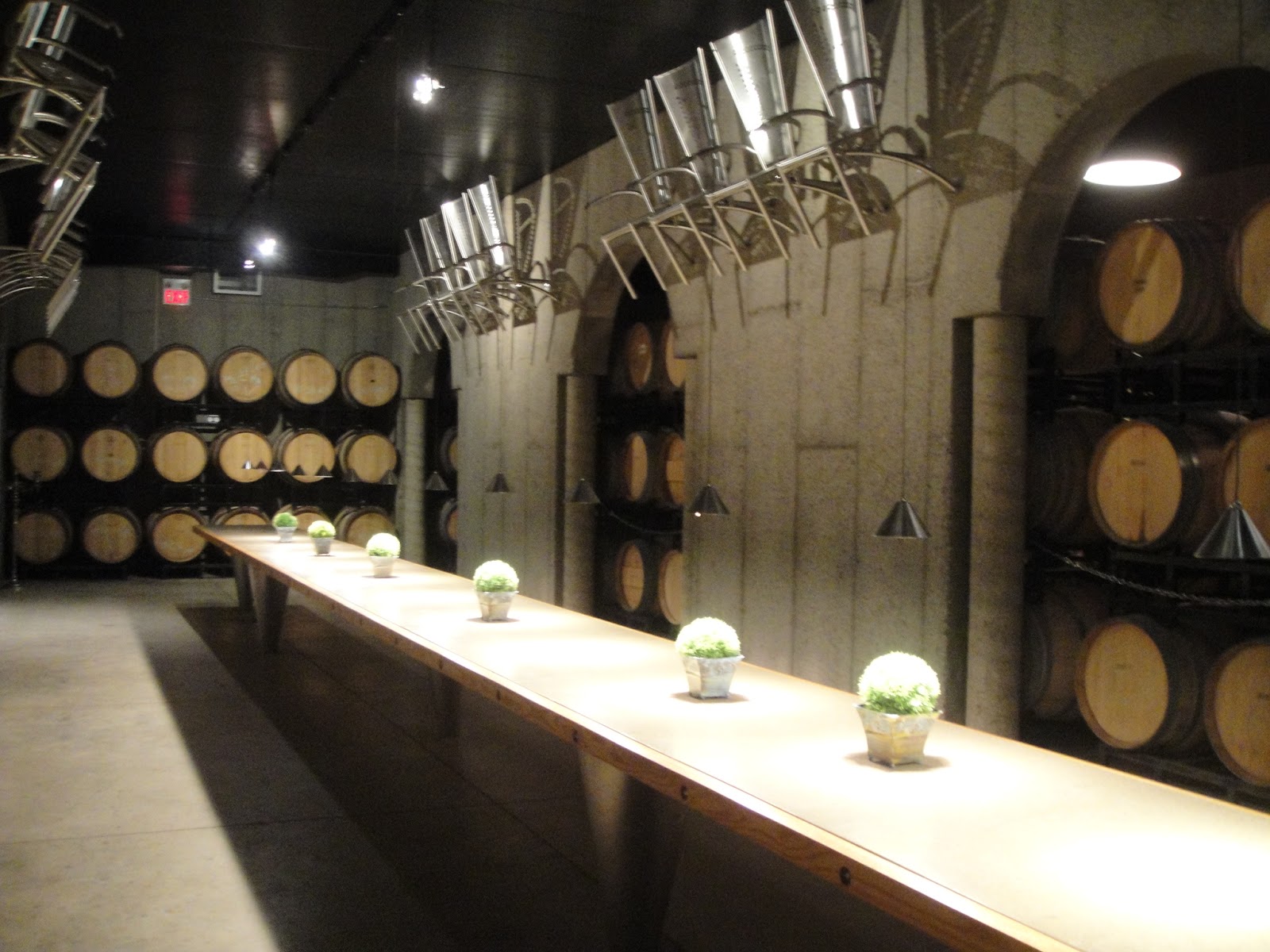
The 2nd longest concrete table...

Being Italian of course this family is ... what's the word... 'patso'. They created a cellar with a 50 foot long concrete table in it (poured in the cellar so it cannot possibly be moved) along with individually designed metal chairs dangling from the wall representing the 9 people in the family, the 4 children and the 17 grandchildren .... each chair designed slightly differently to represent each person.  What do poor people do to celebrate family I wonder?

This table used to be the biggest single pour concrete table but in a quirk of fate some competitor poured one 4 inches longer so this ridiculous thing is only the 2nd longest single pour concrete table in the world (like who cares?).  That said the wines were really, really nice and the piece de resistance was the bubbly red Icewine which we decided we'd wow John with when served inside chocolate shooter glasses that Pondview sold ... and which you'd eat when you'd finished the shot.

Take that!!

Bubbly red Icewine.

Monday, June 24, 2013

GBS and Wine

We decided to spend a few days in Niagara on the Lake last week, to taste their wine and take in a couple of plays at the Shaw Festival held each year.  Its only 120 kms from Toronto so we hired a monster Jeep and headed down the QEW, a very pleasant drive.


These days Niagara on the Lake (NOTL) is very cute, very leafy and very touristy.  We stayed at a country inn near the town, well village centre, to enable us to stroll into town with ease.  It is certainly an idyllic spot these days but it was not always this way.

The Town Hall and Cenotaph on Queen Street

Its around 200 years since the 1812-14 war between Britain and the USA (were they called the USA back then or simply America?) which started for a couple of reasons: firstly the Americans resented the Royal Navy stopping US ships bound for Bonaparte's Europe -- we were blockading the Continent of Europe very effectively at the time -- and also were quite put out because we were also supporting the Indian tribes in the west where the Americans were looking to expand.

This wasn't a good time for the British as we were fighting a really big war of survival in Europe against Boney so we were hideously undermanned in Canada and in particular the first place the Americans would go were they to simply stroll up through New York state which was Niagara on the Lake.

NOTL had been settled after the War of Independence by loyalists from America and in the 1790's was the first capital of Canada... except it wasn't called Canada yet, that would come in 1812-14.  By the 1790's it was apparent that NOTL wasn't a great choice so the capital was moved 40 miles across Lake Ontario to York (today's Toronto) and NOTL went back to sleep again.

Toronto 40 miles away on a clear day

Except that it didn't really as in 1796 the Americans finally got around to taking over/back their fort on the south side of the Niagara river (called Fort Niagara) that the British had captured from the French in 1759 and had ceded to the US at the end of the War of Independence.

Fort Niagara on a good day.  It too has been rebuilt.

News travelled slowly in those days and as nothing much was happening to that point, the Americans simply hadn't bothered to take it over.  Now they did and that prompted the British to build a fort on the opposing side of the river -- Fort George -- to guard against possible incursions by the Americans.

Block Houses at Fort George.  Grade 9 students were staying over night when we visited as part of their Canadian history school curriculum.  Must have been great fun!!

And boy was that prescient for in 1812 the Americans promptly bombarded the fort flat and then landed and took over the fort plus nearby town of NOTL (then called Newark).  They marched on and were thoroughly thrashed in the field first at Queenstown and then later at Stoney Creek and so with the winter closing in and their NOTL garrison (apparently even filthier than the British soldiers and so more prone to disease) dwindling down due to sickness and the demands of the field, they left but not before burning the town flat.  This in the middle of December in the midst of a blizzard which action was promptly condemned by both British and Americans (the guy who ordered it done was promptly fired) and the British responded in 1813/14 by first flattening Fort Niagara and then burning to a cinder every American town, city or village within 100 miles.

This is why none of NOTL's buildings pre-dates 1813 (and very probably the same for Buffalo and other towns that reaped the whirlwind of the original action).  Thankfully we're talking again!

But this didn't really concern NOTL too much as with the end of the war and the building of the canal that enabled shipping to work around the famous falls just up river, NOTL fell back into being a backwater.

The Seward Canal -- the reason why Niagara on the Lake became sleepy again

With no further strategic use, Fort George was abandoned but restored in the 1940's and adds to the tourist lustre of the town which since discovering that grapes could be grown in the region (it always was a fruit and veg region) from which decent wines could be grown (particularly whites), its fortunes again picked up.

Riesling grapes at Pondview Winery.  The roses at each end are planted as early warning devices against pests that affect the grape vines which are hardier than the rose bushes.  If a rose is sick, the grape growers know that they have to treat the grape vines too.

Interesting the way tastes drive business.  At the same time that people were losing the taste for canned fruit (grown in the NOTL region), interest was growing for new world wines (including NOTL) so it also made economic sense to make the switch and with Canada being as cosmopolitan as it is, there were heaps of people just arrived from Europe knowledgeable about wine making.

And then came George Bernard Shaw (or GBS to his friends).  While he never visited NOTL, a local lawyer named Brian Doherty in 1962 decided to put on a couple of Shaw plays, the success of which led to the current 4-month long festival which attracts thousands of people to the sleepy town... including us.

George Bernard Shaw

But I'm getting ahead of myself for Viv had organized a wine tour for us first up which was great fun as we visited 3 wineries, one famous for whites (Pondview), the next for eco-organic-green etc (Hinterbrook) and the last for ice wines (Pilliterri).  None of them have been around for many years but they all made some nice wines -- the blush wines for summer being particularly nice.

The cellar at Pilliterri.  The 2nd longest poured concrete table in the world.  Don't try moving it alone.

As for the plays, the first was a play by Somerset Maughan called "Our Betters" and the second by an Irish playwright called Brian Friel was called "Faith Healer".  The first was fun being a light hearted Roaring 20's style romp but the second was ... interesting, well if you consider it was about a drunk, Irish faith healer who was beaten to death by some home town bhoys for not being able to cure their paraplegic friend, his drunk wife who ultimately left him and committed suicide and his drunk cockney manager who simply shook his head and said 'what a shame'.


Sets for 'Our Betters' (top) and 'Faith Healer' (below) 

We certainly needed a stiff drink after that day!

The following day we spent on a Taste of the Town tour Viv had found on 'Living Social' -- great site, by the way.  We ate nibbles in 6 places and had a history tour by tour guide Bill who did a great job imbibing a lot of local color for us.

Polish cemetery commemorating the 80,000 US and Canadian volunteers of Polish heritage that trained nearby in 1916-17 to serve in the Great War and later in Russia but died in training.
Great trip.  Thanks Niagara on the Lake!!  

Thursday, June 6, 2013

Flogging Friday's Off!

Its not often that Viv and I take trips to different places at different times to do different specific things but a couple of weeks ago was one of them.  Viv went to Toronto to see the Rolling Stones whilst I went to England for my old school old boys annual cricket match.

The cricket match was in Southend as always at the old school's grounds against a team called The Mount who use the ground as their home ground -- and really it is a lovely setting.  The concert was at the Air Canada Centre in downtown Toronto.


I arrived on May 24th, Bermuda Day -- in reality Queen Victoria's birthday and a holiday celebrated around the Commonwealth by being whatever's national day BUT not in Britain curiously.  It was raining when I arrived and was around 50 degrees.  Typical for the year apparently but it came as a shock to me as it had started to warm up in Bermuda.

Fortunately my friend Kevin who I was staying with suggested a short drive out into the lovely Essex countryside and lunch and a couple of pints at a 14th Century coaching inn in Maldon called the Blue Boar Hotel. An inspired suggestion.  The place was wonderful and had a large roaring log fire to cheer us all up.


The evening was something I was looking forward to as Kevin's brother Andy (another old school friend) had bought a pub in a village called Little Bromley and had quit his City job to run it with his wife and father-in-law.  

I do like the north Essex countryside as it is real Constable country -- the artist John Constable that is, not the boys in blue.  And the pub itself was all that you could hope for that far out in the country (north of Colchester on the Sussex border).  Called the Haywain after the famous Constable painting Andy gave me the tour and ... well, what a story.

The Haywain by John Constable

Apparently the pub used to be called the Fox and Hounds and was one of the largest gay/transvestite pub/clubs in the east.  People used to travel down from as far afield as Newcastle (which is 500+ miles away) particularly for the Friday Night is Flogging Night sessions.  Andy said cleaning the place out was absolutely disgusting with all the restraints, mattresses.... well, you get the picture.

With Gill. Andy in the background.

He also said that his neighbours in the 20 home village, 1 pub, no other retail store, were delighted he was there as their house prices had now gone up by at least 20%.

Not so the group who turned up a few weeks ago on a Friday expecting a darn good thrashing but were only offered a pint of delicious Adnams by mine host.

The weekend was cloudless blue skies and warmth.  Fantastic.  And the game was great too... another draw.  But the stories!  My favourite was Luis'.

You have to know Luis and of course the old Headmaster whom everyone nicknamed 'Bubble' because of his perfectly round and bald head.  Luis was captain of tennis and on one occasion was waiting outside the door of the new Headmaster's office wanting to chat to him about using the court for a team practice.  Bubble came along and said:

"Come with me, see."

"But sir, I am waiting to see the Headmaster about..."

"Don't speak, boy.  It will only go worse for you if you do."

"But sir, I haven't..."

"I repeat, don't speak boy.  Come with me."


And they went into the old man's study (he really was an old man by this time.  Well over 80).  As Bubble rummaged in his cupboard, Luis suddenly realised what was happening.  Bubble was searching for the perfect cane that he'd cut from the bamboo growing in the garden.

"Sir, you should know that I wasn't..."

"Silence, boy.  I already told you speaking will only make it worse."

"But sir..."

And then Luis gave up and took his punishment like a man.  

But it didn't end there for Luis's dad was a strict disciplinarian.  He always wanted to know if Luis had been punished, how and what for and so Luis was faced with a dilemma.  What did he say if anything? If he said nothing, his dad would find out and ...  If he told him, he wouldn't likely believe in Luis' innocence (and in all honesty, who would?).  Luis told him and was ... well punished again.

A couple of weeks later, Bubble called Luis into his study again where to Luis' surprise he offered him a glass of whisky and a cigar.  Luis took both as the undoubted peace offering that it was intended to be.

And of course the Stones.  Well Viv said they were fantastic.  Of course they were!


Sunday, May 12, 2013

Location, Location, Location

Had the Cayman Islands been on the other side of Cuba, chances are they would be Spanish and very poor.  However that's not where the Cayman Trench is.  Its this side -- sorry, the south side of Cuba.

The Trench is essentially an 8000 metre high mountain under water and its three peaks are Grand Cayman, Little Cayman and Cayman Brac.  I thought they were volcanic but I was disabused of this notion by the marine guru at the Cayman National Museum at a talk earlier this week as she revealed the Cayman Island Maritime Heritage Trail to the world.

Cayman is also swamped by ship wrecked vessels for the simple reason that the wind/current combination for sail bound vessels in the past was in through the southern part and out in the channel between Cuba (and of course Cayman) and the Central American coast.  In dodgy weather this meant that many ships ploughed into Cayman's reefs (all of which are amazingly close in to shore) and were wrecked... then ransacked and then finally salvaged.  Like Bermuda, one of Cayman's early industries was that of wrecking.

In through the southern routes and Out through the channel between Cayman, Central America and Florida
So having been fired up by the announcement of this trail I decided to go and follow it today.  First up, the map of the trail is really small scale so tricky to follow if you don't have a fair grasp of the road layouts in Cayman which fortunately I do so I decided to start with the eastern part of the trail, starting in a place called Prospect Point.  It's also a nice way to discover the island as I'd not been to many of the parts I covered today and I discovered that Prospect Point was a really nice residential location indeed.  But I was here for the trail and found it.

The fort used to be nearby but is now long gone

There is a small channel in the reef line here so the early settlers decided to build a fort, as protection from pirates as much as anything else for the great colonial powers really didn't have any time for Cayman being small, waterless, no natural resources and with a landscape not set up for plantation farming like nearby Jamaica.  So Cayman was largely ignored.  Several schooners were lost on the reefs nearby in the 1800's.

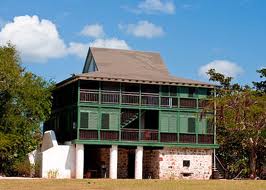
Next stop was Pedro St. James, the oldest building in Cayman dating back to 1780.


It's government run these days and well worth a visit as a kindly old gentleman who turned out to be part of the original Eden family that built it was the tour guide.  The building was a ruin for many years until the government stepped in and bought and painstakingly renovated back to its original condition.  And it's a lovely old colonial style building indeed.

Pre-Renovation

Today fully Renovated

This is in the outdoor non-attached kitchen (fire hazard and heat dispersement). and the restored old stove top.  Wood frame filled with sand, then coals on top rather like today's BBQ

The first William Eden arrived in Cayman in the 1770's from Devizes in Devon and almost immediately met the governor's daughter, a Miss Bodden -- a very Caymanian name.  They married and started having babies so needed a home, this one.  Sadly Mrs. Eden died in childbirth with #4 so William married another lady with whom he had 6 more children.  The new Mrs. Eden was reportedly a bit of a shrew so he upped and left for Honduras to log mahogany (for home and boat building) and sadly for him, that is where he then died leaving Mrs. Eden with 10 children and this house named St. James on Pedro Point (hence the name).

William Eden II was a very prominent businessman and inevitably with the biggest house that is where many of the business and governmental decisions were made in Cayman as Bodden Town, nearby, was the island's first capital.  In the early days there were few local laws only those brought in from Jamaica (Cayman was a dependency back then) few of which had any relevance and so were largely ignored.  That worked until the population grew larger when the old ways (essentially any problems were put out for arbitration with the neighbors but if you didn't like the result, you used fists) were found to be chaotic bordering on anarchy.  So in 1831 the bigwigs sat down and drafted a 'proposal' for the Governor of Jamaica essentially creating a democratic society.  Ultimately somebody read the proposal and in the 1850's it was accepted.  This enabled local laws to be made and the anarchy stopped.

Pedro St. James was also the place where the proclamation outlawing slavery and freeing all slaves was made in 1835.  The Act was actually passed in 1833.  News traveled slowly in those days.

There's also a nice display of near contemporary news from the 1940-1960 times when the island went from being a mosquito ridden swamp fringed by isolated settlements (this is pre-roads) to what we know it is today.  One section described the fact that personal incomes had actually gone down since the first settlement as truly Cayman had nothing, not even for Caymanians many of whom left to seek work.  In the late 1940's Government revenues totaled 12,500 pounds sterling, three-quarters of which came from the sale of stamps!  There were 3 civil servants back then as opposed to 4,000 today!  The 1950's saw roads, an airport and the first hotel on 7 Mile Beach.  There's no bush on 7 Mile Beach these days but 60 years ago there was no road and bush, bush and more bush.  And no tourists either!

After this I was on the road again out east -- there's only one road so difficult to get lost.  However the east road is all by the coast with reefs and beaches so it was difficult to know where the trail points were other than with the microscopic trail signs often hidden away behind things.  This meant annoying everyone on the road traveling east as I couldn't go more than 20 mph otherwise I'd miss the signs.

The first was The Iphigenia, a Welsh barque that was stranded on the Bodden Town reefs in 1874 -- reckless navigation not weather being the reason.  The ship was overrun by local salvagers, something the local authorities found difficult to control there being 2 magistrates who tried to keep the peace whilst the 3rd was joining in.  The captain was reprimanded and told 'to be more careful next time'.


Difficult to imagine conditions where a ship would founder on a day like today!

Next was The Juga, a Norwegian ship wrecked on reefs at Old Isaac in 1888.  Part of it is still there above the water line.  As it's really close into shore local wreckers were on board within 5 minutes, first helping the crew away, next negotiating salvage rights with the captain before finally dipping in.

Don't expect to see this on the water side of the road.  It is on the other side almost hidden by foliage. I missed it first time around.
Then came the East End Lighthouse -- on the other side of the road on top of a small bluff.  The lighthouse was first erected in 1906/07 and was replaced in 1957 with a newer model.  Before this a lantern was put on top of a 60 foot mast each night.  Progress indeed.  Today's model is driven by solar power.


The old and the new ... old at the back.  They don't like throwing things away in Cayman!

Finally came the Wreck of the Ten Sail right out at the far eastern end.  In 1794 during the Revolutionary War with France, the Royal Navy had captured a French frigate nearby and was sending it back to England for refit under the name HMS Convert.  She was also acting as security for a convoy of 58 merchant ships also sailing back to various parts of Europe -- I thought the convoy system was only introduced in WW1 but clearly it was in operation before this.  The convoy was setting sail from Jamaica on the morning tide but the night before 6 or 7 vessels left harbour so HMS Convert and the rest of the convoy had to leave pretty quickly.  News came back that those turkeys who'd left before the others had all ploughed into some unknown reefs somewhere so the chase was on and HMS Convert was in the van.  A lookout in the night called out a warning about reefs just off to one side and as HMS Convert turned away another merchant vessel who'd clearly been dreaming ploughed into her side and both ended up on the reefs as well.  What didn't help was the fact that there was quite a strong breeze driving the convoy onto the reefs so in the end 10 ships, HMS Convert and 9 other merchantmen, ended up on the reefs hence the name of the site.  The rest of the convoy managed to get back to their home jurisdictions unscathed.  Convert's captain faced customary court marshal and was acquitted and went on to greater things in the Royal Navy.


This ship foundered in 1963.

200 year anniversary memorial of the Ten Sails
On the way back to West Bay, I drove through South Sound and came across Pallas and Pull and Be Damned Point.  This is pretty much the south eastern most point of the island and the place where all the bad weather comes in from -- plus it's the part where most ships pile up.  The Pallas was another Norwegian ship in ballast from Scotland that piled into the reef in 1875.  Part can still be seen on the reefs.

Cemetery in the background

The remains of the Pallas
Now this is interesting.  This was the time when the shipping world was making the great transition from sail to steam.  So what happened to all the older sailing vessels?  I'd never really thought about it but the Norwegians had.  They bought them, or certainly a large number of them, and continued to operate them under sail.  Some of course foundered and some on Cayman.  The steam vessels didn't have to use the wind/current channels of old, they could now go when and where they pleased so largely avoided Cayman.

This site was right next to yet another cemetery.  I've not mentioned this before but there are cemeteries everywhere.  They are really ornate and this one was no different.  In addition there appeared to be a digging party in the cemetery as a load of people were there, many digging away and seemingly having a party at the same time.

A private cemetery at Prospect Point

But the beach itself on this part of South Sound was actually lovely.  Not the calm and quiet waters of 7 Mile Beach, but roiled by the endless ocean swell and currents coming up from the south.  Today being calm and quiet, everything looked beautiful but I can imagine it being nasty when the wind picks up.

A more recent ship wreck on South Sound
All in all, a great day!

Saturday, May 11, 2013

Meeting Elvis!

I know.  What happens in Vegas, stays in Vegas.  Great tag line by the PR folks that promote Las Vegas to the world and it really is a neat tag line too.  Wish I'd thought of it first.  And I know it all took place a month ago but in my defense I got a little busy and then forgot about it which is a mistake as its not every day that you get to meet Elvis.

The Real Thing

Again I know Elvis is no longer around having eaten his last banana and peanut butter sandwich in 1977, but this is Vegas!

It all happened because of Rosie really, one of my cricket mates.  He loves Vegas and as he was getting married (to Kim), he really wanted to get married in Vegas too.  So he invited a few Associates cricketers to the bash and even more surprisingly a few of us decided to go.

Rosie organized a collective hotel (the new Vdara, an MGM hotel) and a few parties/shows.  Viv and I didn't fancy Shania Twain so saw a comedian instead who was so laid back and low key that he seemed virtually asleep.  But still all good fun really.

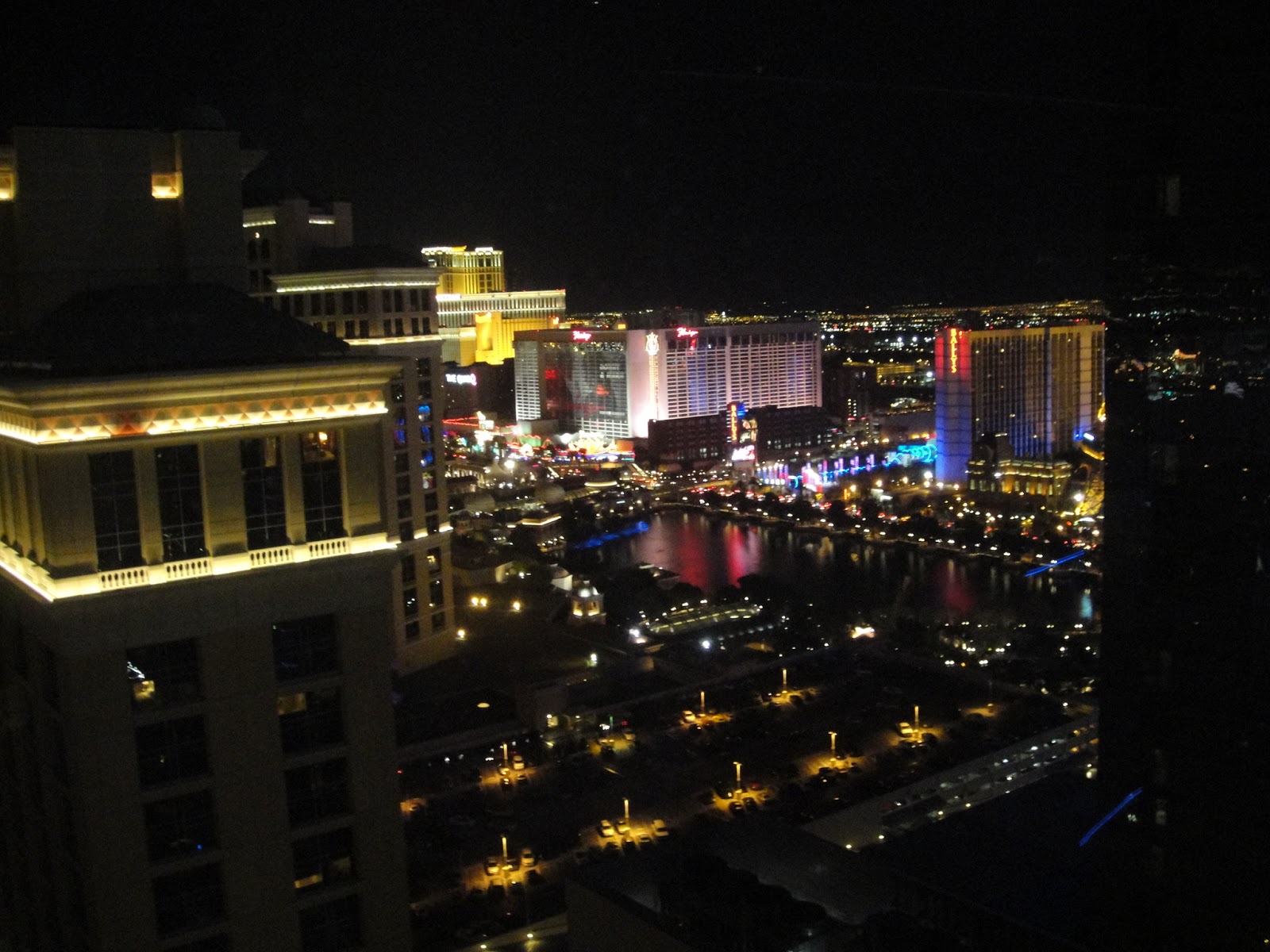
Springtime in Las Vegas at the Bellagio

Next door to the Bellagio

The wedding was at the LV Country Club and all went beautifully actually until that moment when Rosie decided to sing with the band.  What a dreadful voice!  Mind you it was all a cunning ploy for he stopped half way and introduced Elvis to the audience.

Las Vegas Country Club wedding vale

"Love me Tender..."

He had a nice voice too.  Maybe not quite like Elvis the original but still good and of course he sung a few of Elvis' love songs and the big finale...

"Viva Las Vegas!"

The King & The Associates -- Rosie, Ruthless and Cookie

And as for the rest of it, well what happens in Vegas...