Showing posts with label Georgetown. Show all posts

Wednesday, March 18, 2020

Visitors Volume 1


In early January, we'd just returned from spending Christmas in Canada with Dee Dee and the following day Viv's mum Anna moved in, swiftly followed by Viv's uncle Dick a day later. This is Dick's first visit and he hadn't seen Anna for several years. 

It was just before Chinese New Year started (which began in the last week of January and lasted 2 weeks this year). It is the Year of the Rat so everywhere was highly decorated with what looked to me less like rats but more like cuddly-ish mice so everywhere was very pretty and as it is the new year, pretty much everything was cleaned up too.


We did a lot of stuff! 

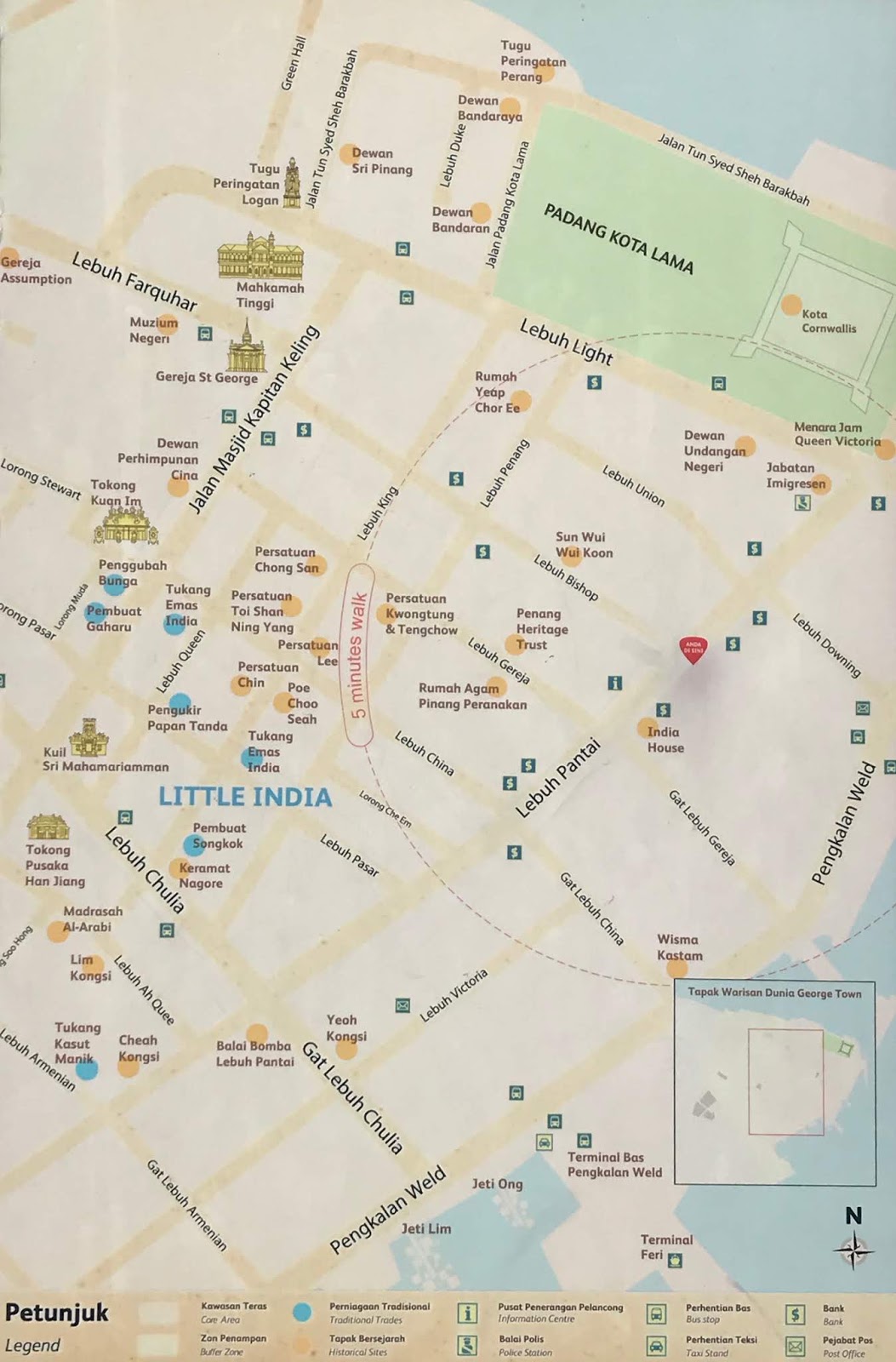
Georgetown's UNESCO World Heritage Centre was decked out nicely and after a nice walk and some lunch one day we went to the Sun Yet Sen Museum in Armenian Street.

Sun Yat Sen was the father of the Chinese Republic and amongst other places lived for a while in Penang. The object of that really was to raise funds for his next rebellion. He was involved in several unsuccessful ones as well so was a person of interest for the Chinese who after a little while objected to the British about his rabble rousing presence in Penang, whereupon they asked him to move on. In all, he was in Penang for less than one year.


Fascinating museum. Small but amongst it all, you get to learn a bit about Sun Yet Sen the man too, in particular his lady loves which were described in some detail rather surprisingly. Most know him as the revolutionary not the lover, husband and all the rest. However, he was very active and traveled everywhere trying to raise interest and of course funding. One exhibit was set aside just to this; how much he raised and in which country. Remember this is back at the turn of the 20th century so the amounts are of course smaller but the country which provided the most funds for his struggle was..... wait for it.... Canada! Who'd have thought?  

Very nice museum housed in a lovely shophouse in Armenian Street. Well worth a visit!

Viv's tennis friend, Lee Pin, asked us out for a day trip over to the mainland in Butterworth to visit a Chinese temple that was both huge and beautifully decked out for Chinese New Year. We'd never really been to Butterworth other than on that occasion when we'd taken a wrong turning and were headed towards the docks so were keen to check it out. Basically it's just one Main Street with a temple at the end. Big temple though.


Lee Pin had organised a dinner at a restaurant on the beach at Batu Ferringhi with a special dish she wanted us to try (Duck and Yam soup) after the temple but before that she wanted us to try the 'best ' local Rojak. Now when a Penangite says that such and such is the 'best' it of course means in their opinion which again is of course reason enough to try it out. Viv and I had eaten rojak before but not Anna and Dick so this would be all new to them.

The famous rojak kopi (coffee) shop
Rojak
The place was a coffee shop in the middle of Butterworth. Coffee shops like this are where the locals go for dessert and of course the local incredibly black coffee. Beans are roasted in a special way so that the beans are coal black as is the coffee. Not terribly strong but with a definite flavour to which is added condensed milk -- that's for the black coffee which apparently without the condensed milk is rather like engine sump oil. For the white coffee, you add evaporated milk to the mix. Did I mention sugar? Lots of that too. The experience leaves quite a film in and around your mouth for quite some time.

How to describe rojak? It is a popular dessert hereabouts. Take cut up chunks of fruit and raw vegetables and cover it with a sweet and sour but something else thick, sticky, gooey gloop and sprinkle with ground nuts. It is a curious taste to be sure, and not unpleasant. 'Interesting' was a word I heard quite a bit from Dick and Anna.

On the way back we stopped off at the snake temple near the airport for a brief visit. Snakes were everywhere although thankfully not crawling around too much. Just sort of lying there and writhing. I think they all came around one day and nobody cleared them out, so the snakes stayed.


I'd driven through Batu Ferringhi often enough. It's where the tourist resorts are located but as the beaches are pretty awful and the water very muddy brown with pollution and run off from farming on the mainland, we never had any intention of going to the beach. Not after Bermuda anyway! However the restaurant we went to was right on the beach and it turned out to be actually.... really rather lovely: the beach not the water. As was the duck/yam soup and the meal overall. Thanks Lee Pin!

Sunset on the beach at Batu Ferringhi
We also decided to take Dick to the Blue Mansion in Georgetown. He is keen on history and heritage, or at least he said he was so we made sure to load him up on it.

The Blue Mansion
The Blue Mansion is simply extraordinary. The original house was built and lived in by a Chinese guy called Cheong Fatt Tze. A true rags to riches story, he started out as a coolie labourer in Indonesia in the 1870's where he made his first great move: he married the boss' daughter and took over his trading business. 

He was really good at it and moved to Penang because the British were there and more trade was possible. He was into everything, built this mansion and became the wealthiest man in China towards the end of the 19th century. The Emperor even appointed him as special counsellor making him the 3rd most powerful person in China even though he didn't live there. We went on a tour of the mansion which has been massively renovated after it became derelict during WWII when the Japanese arrived. They persecuted important local Chinese people and Cheong's heirs (he was dead by this time) received no favours from them and had to rent out the mansion to several hundred squatters simply to survive. The result was dereliction and the mansion was abandoned for years until private money acquired it and turned it into this lovely museum.

It has been a movie set many times including movies based on the life of Sun Yat Sen but more recently of Anna and the King of Siam. Because the Thai government felt that the movie disrespected the royal family, they refused permission to film in Bangkok so the movie used the Blue Mansion and more generally Penang as the site location for the movie.

Another outing, although not so long but still pretty onerous was visiting the Kee Lok See temple at Penang Hill. It is the largest such temple in SE Asia. For Chinese New Year, they always garland the temple and grounds in flowers, lights and all the other ornate stuff that goes with Chinese New Year so at this time of the year it is definitely worth a visit. Lots of stairs but very worth it.

The seven storey pagoda is a key point in the temple
I think Dick was exhausted by the time he left!!


Thursday, December 5, 2019

Some Early Mosques and some bloody pigeons

We'd felt for some time that we hadn't done enough 'culture' or 'heritage' here in Penang since we arrived, actually nearly 2 years ago now.... doesn't time fly? So we planned to do some more and earlier this week we went on one of Michelle's Spiral Synergy tours which would include the 3 oldest mosques in Georgetown. Well attended and very interesting indeed. The tour guide, Teresa, was fun which made for a good time all round.

The mosques are all within a few hundred yards of one another but if you wander round and round in circles enough and stop for some interesting tea and cakes at a Jawi cafe, the time passes most agreeably without too many gaps where you wonder what else? What was interesting about each mosque is the demographic that attends them as all date back to the early 1800's, just after the British arrived, and were built on land which even then was in the middle of what was then downtown Georgetown. The city/town back then was essentially 6 blocks back from the water (Beach Street or Jalan Pantai today) and no more than a dozen streets going left to right in a grid pattern. So that means there used to be 72 (or so) blocks where all commerce and in general all life took place for there were no other settlements on the island back then.


The British set aside what they thought as the best bits for them of course but also for the Indians they'd brought with them (mostly Tamils from south India who turned out to be muslims in the main), the Chinese who rushed in as soon as they saw what was happening (mainly Hokkien people from Fujian province) and also the local Malays who came over from the mainland too.... except that in the main they were not Malays, rather Indonesians trying to get away from the protestant Dutch who were forever fighting a rebellion in Aceh, a town in Indonesia only a very short boat ride away (less than 1/2 hour by plane these days). So, multiple demographics with obviously multiple requirements for their holy houses. Even today, the demographic separation remains broadly intact so Indian muslims rarely go to an Indonesian mosque (and of course vice versa) and neither attend other than rarely the newer Malay mosques.

I'd always wondered about what the colour scheme of old Penang was for today so many buildings look dilapidated in the World Heritage part of Georgetown. Apparently there were 3 colours, sky blue (with the colour coming from a local tree's berries that grow everywhere), yellow like in the photo (derived from cow's urine mixed with the white wash that is also prevalent. Local cows eat local mangoes and the result is very yellow apparently) and green which is a combination of the other two. Must have been very colourful. Makes me happy coming from Bermuda where houses are all lovely different pastel colours to think that something similar was happening here too. All old photos are black and white so of course impossible to know how colourful or not things really were. I like the colourful thought.


The big mosque on what used to be called Pitt Street was where we had the big talk from a local learned man. A very lively and jovial Indian who said his name was Dong and that if we wanted to remember him, we could always think of a bell and go Ding.... I believe he could make a living selling ice to the eskimos.

Someone had told me the mosque had been named after a pre-Colonial era ships captain of great renown but Dong told us that 'Kapitan' simply means leader and 'Keling' means Indian people. Another myth squashed!


Dong (or was it Ding?) took us on a whirlwind trip around the big mosque describing the pre-service washing requirements, why you kneeled on lines of carpet (hurts the knees otherwise apparently!), how you prayed, when you prayed, what the calling on words actually meant (pretty much 'time for prayer, get out of bed' for the morning session, similar thereafter), the fact that the Imams were not religious people just normal people who had something to say... and a whole lot of other stuff. He gave out free pamphlets on topics like 'Science in Islam', 'The Truth about Jesus', 'The position of Women in Islam' and other topics too. So easy for me to be cynical and describe it all as being a sell of the religion, but I'd like to think it was someone reaching out trying to dispel some myths. The fact that he used to be a Christian and converted (apparently he and Teresa were long time friends so both laughed about it) came up and I immediately thought about Saul becoming St. Paul and how he basically created the Christian faith out of a mish mash of ideas, facts and fiction. Not so different really.

A question on terrorism and radical Islam came up (it may have even been Ding (or Dong) who raised it unasked, come to think of it). Also the different sects; sunni, shi-ite, wahabbi (sp?). He brushed across the top of it. 'If someone kills or harms another person, he is not a muslim. He is a killer.' As for the sects... 'there are no sects in the muslim faith. All those others aren't Islam.'

Lots to digest then as we continued our stroll across the street in fact to the next mosque, which was actually not a real mosque but a shrine, called the Nagore Shrine. It was in crossing the road that I was attacked.

I'd like to know who ever came up with the notion that being pooped upon by pigeons is good luck .... OK I know, my mum did. But who else? Total crackpots (Mum excluded of course), that's who. It is nasty, smelly and really downright unpleasant. Of course Google has a myriad of links to totally gormless websites that devote column inches to this topic. Here's one:

I’m sure we can all agree that we’ve had our fair share of annoyance with bird defecation – it leaves a nasty stain on our cars and clothing, and any time birds are around, we’re instantly aware of their presence and hope that they don’t decide to use our clothes (or skin) as a toilet. It’s simply become a random, everyday occurrence and constant annoyance. How could anyone ever like it?

If you agreed with any of the statements I’ve said above, then it’ll come as just as much of a surprise to you when I say bird poop is actually a symbol of good luck. Believe it or not, there’s an entire mythical world behind the existence of and the importance of when a bird sh*ts on your car. If you’re a bit skeptical, keep reading.

For centuries, birds have always been, to a degree, mythical creatures; the Phoenix is an example of this in many cultures. Imagine, an animal able to simply spread their wings and glide across the sky with no issue keeping in sync formation with the birds around them.

Unfortunately, the price of being an airborne member of the animal kingdom is never knowing or having the appropriate means of defecation. Where would their waste go if they have no time to reach the ground to release it? Good enough for birds though, they’ve figured out the answer to that question long before humanity could even form adequate societies: give the humans good karma if they ever had a direct encounter with their droppings.

The main reason why we get mad at seeing bird poop “fly-by’s” is because of its unexpectedness and the annoyance brought on by the thought of cleaning it up. That doesn’t stop the Karma Gods from working, which in turn will bring you good luck and good fortune. With that being said, the next time you see bird poop in someone’s (or your own) hair, clothing, or windshield, don’t get mad – take a sigh of relief!

Numbskulls! I really don't need any self help dummy to tell me in 5 repetitive paragraphs of inanity that being pooped on is nasty. Really. As for the Phoenix... who cares about the bloody phoenix? It's a mythical bird. Not real. Getting pooped on by a bloody pigeon though, that is real life mate.

So it was with a less generous demeanour that I crossed the street into the shrine. It is both old and a bit ragged to tell the truth. But it is what it appears to be. A living, working place of worship not a gilded palace. I instantly felt the people here would understand my pigeon issues.


Wednesday, November 20, 2019

Life and Death in Penang, well mostly Death really

We just came back for a trek that took us round the world, rather to our surprise. It just happened that way. We wanted to be with Indy and Cat when their new baby was born (our first grandchild!!) and then we sort of just carried on. I will write about that in a separate post but during our trek we for some reason realised that we have just done maybe two things as a tourist/visitor in the near two years since we arrived in Penang. OK we had sort of planned it this way thinking that we'd go with visitors, but when that happened we .... well didn't. Whoops and all that. So we decided we'd do something about it when we got back.

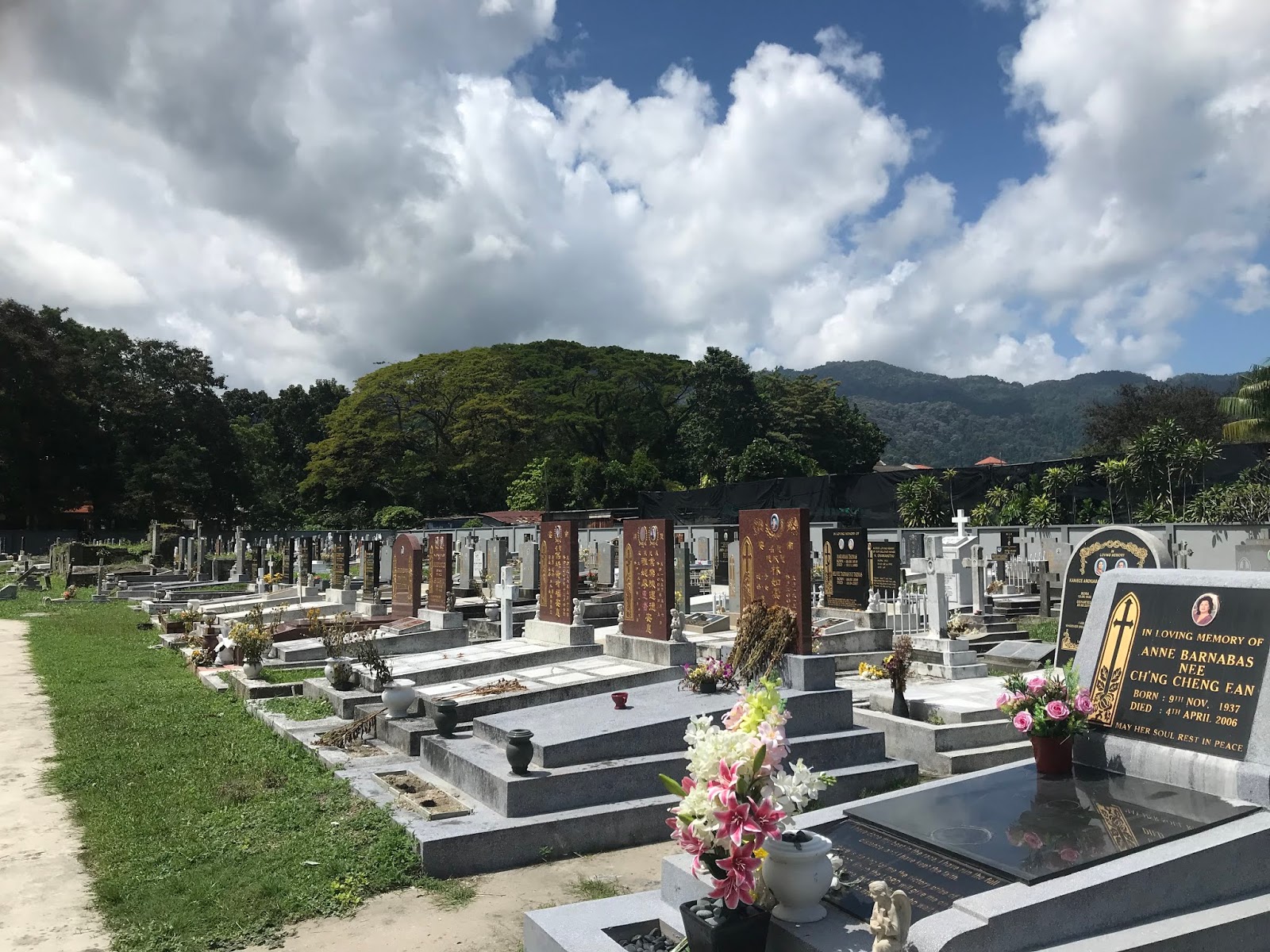
There's a monthly newsletter sent around by mailing list by a long time resident English lady named Michelle who just loves this place and just loves organising things, or so it seems to me. Anyway first up was a tour of the old graveyards in Georgetown narrated by a guy we'd run into one of our other tours, Clement. Very informative it was too. Particularly as Georgetown has magnificent colonial heritage dating back to first inhabitation in 1786 under the purview of one Francis Light and his employers, the East India Company.

Francis Light only lasted 5 years in Georgetown before he succumbed. He didn't want a fancy gravestone so was originally buried very simply but about 100 years later in full Victorian vanity, the local burghers upgraded him to this one.
Back then of course the population was tiny and the first settlers started in the area of the harbour from where the town expanded outwards. However small the population was did not deter the onset of death for this is the tropics, aka the white man's grave. So graveyards were needed and needed fast. Immediately however rose a problem... what to do about the catholics.

The Jackson family was particularly unfortunate
Sounds ridiculous today, but really does it? Back in the late 18th century, church was much stronger than today and from Great Britain it was solidly protestant, and in the early days solidly Church of England (CofE). The laws of the land (now including Penang) discriminated actively against catholics primarily via the Act of Settlement which prevent catholics from holding any high office (still do as this Act has never been repealed). The law itself is a hangover from the end of the Stuart era and start of the Hannoverians, which in itself is a longer hangover from the Civil War, and was aimed at securing royal succession in Protestant hands as both the last Stuart Queens (Mary and Anne) could not keep any of their children alive whilst Dad (the ousted James II) and his catholic heirs had no such problem (remember Bonny Prince Charlie?). Check it out on Wikipedia here for the fuller story. Anyway when the couple of hundred first colonists/settlers arrived, they included both protestants and catholics and the local bacteria and other bugs had no problem getting stuck into the pair of them irrespective of religion. So graveyards.

First, there was a sort of NIMBY thing regarding graveyards so they were set aside well out of town (then anyway, not so now) and on land that was rather low lying that nobody really wanted to build upon anyway. A wall was built delineating the protestant side from the catholic side with the lower land (and hence far more prone to flooding) given over to the catholics. Typical.

The very ornate gravestones apparently are all Scottish families, but you can see the wall in the background
Second, what to do about all those others who also showed up? In addition to the original settlers came traders from other nations as well as people from the mainland and elsewhere seeking work in the new bustling trading entrepĂ´t (which immediately shut down Malacca as a place of importance). The Dutch retreated (actually they were ejected) to Java, their possession. Nearly forgot and backing up a bit, when the Dutch originally arrived in the early 16th century, they kicked out the incumbent Portuguese who were/are catholics. In the 150 years or so that the Portuguese had been in Malacca and elsewhere they had intermarried so virtually everyone was Eurasian by now and with the Dutch persecuting catholics, they simply left with many going to Phuket where by coincidence they met with the same but younger Francis Light who later founded Penang. He took up with a Eurasian girl (probably married her but this would have been a social gaffe of the first order back then, so he said nothing about it to his employers) and when he came to Penang and saw how many new settlers were catching everything going and dying in droves, invited the Phuket Portuguese to come along and pad out the numbers again.

Aaaagh! What a palaver. All these catholics but at least this lot were almost European. Can't have any of the new locals in the graveyards too.

Third, some of the locals (Chinese, Indians, Armenians, etc.) turned out to be terrific businessmen and did really well becoming extremely wealthy in the process. It also transpired that they were prone to dying too (although not so young as the newbies).

The upshot to all this was the typical British muddle/compromise. If you had the wherewithal, you were in.... except the catholics who went the other side of the wall.


However the Japanese were no respecters of well, pretty much everything if you read about their actions in WWII and simply bombed the place to bits.  Part of it anyway. The Catholic side was locked up so we couldn't go inside but looked pretty much empty of gravestones. If it wasn't the bombing, it was the flooding most like. No, most likely the protestants!

Spare a thought for the Jews though. They had been in Penang since the start but in far smaller numbers. Clement said the Jews that came to Penang were from the Middle East not Europe. Turkey, Persia, Mesopotamia. They were/are a different tribe to the Europeans and had their own ceremonies and ways. Francis Light when he set to creating Georgetown created enclaves for the various races and sects. The Jews had their own together with one synagogue and one graveyard.

The different Jewish tribes have different burial traditions. Some of the gravestones are triangular, some rounded. All are supposed to point towards Jerusalem.
All gone now. The Jews left after the Seven Day War in 1967 for Israel, the synagogue closed but the graveyard which was slated for redevelopment was saved by private donations (as it is to this day). It is maintained by an Indian family and remains beautifully cared for. This ensures that people don't break in and desecrate the gravestones (which did happen in the past).

These days the main Christian graveyard is on Western Road and is pretty huge. Again the theme throughout is that they are beautifully maintained. Clement tried to raise some enthusiasm for this graveyard but in reality it was far less interesting than the older ones. Exception being the mausoleum remembering the crew of a Russian warship which had the misfortune to be visiting Penang at the outbreak of WWI. A German raider, the Emden, snuck in at dusk one day and sunk the Russian vessel with heavy loss of life. Thankfully not the captain... he was tucked up in bed at the E&O Hotel with his mistress. History relates that he was recalled and court martialled. Every year the Russian ambassador visits the site where a remembrance ceremony is held on the anniversary of the action. Clement said this happened even during the Soviet era. Nice.

By now, all were going through graveyard fatigue so clearly this was the time for the visit to the new catholic cemetery. Typical protestant bias! I've driven past the graveyard a hundred times, its on a main road, but had never seen it before so this was nice.


The names were mainly Chinese with a few Portuguese names like De Silva and Perreira thrown in for good measure along with some Indian and western names. But really... no trees! In every other cemetery there were lovely trees giving pleasant shade but here... nothing! Hope some get planted soon.

Tuesday, October 30, 2018

Visitors

We had our first visitor recently in Penang. It was Debbie our long time friend from Bermuda who now lives in England. It was great to see her and that she was our first.

Viv and I realised that we really haven't done all that much sight seeing in Penang so this was a chance for us to do just that. It has been great, a real eye opener for us as well, so where to start?

1. Circumnavigation


On a couple of occasions I tried to but a street map of the island of Penang. You can find small ones in various tourist brochures but never a proper map. I like maps and discovered to my dismay that no bookshops stocked them. The main tourist office said I should find a Lonely Planet guide and use the map in that as they had none too. So in our defence we hadn't really pushed the envelope in looking around much and decided that Debbie was our perfect chance.

The island is pretty big. Certainly large enough to hold nearly 800,000 inhabitants and it appears that most live in right hand side which includes Georgetown and the urban suburbs.  The middle is largely mountainous and jungle and the left hand side is actually pretty sparsely populated. However there is the Tropical Fruit Farm there.

2. Fruit Farm

The fruit in Penang is marvellous, so different to where we had been before, and the Fruit Farm is all about that. Sadly it is not main season for most fruit (that is April to June) so no durian (gulp), mangoes, and lots of other fruits. However the all year round favourites were there as was a very knowledgeable guide who was able to walk us through the various orchards, avoid most of the mosquito swamps (it has been raining a lot here) and generally keep us alive as this island is a constant reminder that much of it is still primal jungle.

The view from the fruit farm down to the coast in the distance. It is built on the side of hills

The fruit that was there was very delicious too. Very worth while visit.

3. The Bottom Left


This part is rather unpopulated and its villages are very poor looking and extremely rural. At the end of one road... and it was the end... it seemed as though everything just ended. Then all of a sudden, we came into a very wide and impressive highway going from somewhere to somewhere else... we had no map so could not be sure where we were. Except definitely bottom left.

4. Cocktails

As I have mentioned before we have known Debbie for quite some time. 1985 to be precise. One of Debbie's rather endearing traits is the 5 o'clock cocktail and I had forgotten this and I think so had Viv but on our first day of exploration around late afternoonish, Debbie's demeanour changed. Not for the worst of course but she did pointedly start a conversation about this tradition of hers and we finally noticed that it was well past this point. And when one considered things all in all, we felt that this was one tradition that was well worth keeping up in Penang.

We'd started Debbie's holiday with a rooftop cocktail overlooking the entire island and at home thereafter would continue with a themed cocktail du jour depending on what we all felt like. Limes and fresh mint are readily available so once I'd sourced some Bacardi... mojito's. That's how it went.

We had been recommended Red Garden in Georgetown as a good people watching spot and as we had never visited decided that would be the place on our first day of exploration... and found it to be a sort of Octoberfest location. Big bandstage in the centre. Hawker stands all around the periphery. Tables set out in the middle serving buckets of 6 beers at a time to thirsty frequenters and revellers. Just perfect for us in fact after a hard days circumnavigating (we didn't discover that we had barely 'done' half of the island later on when we looked at Google Maps!).


5. A Tale of Two Bridges

Once we discovered our oversight in completing the job on Day 1, we decided to complete things but including both bridges and some shopping in our itinerary (Debbie is a keen shopper). Hence our two bridges tour.


This was simply heading to the Design Village on the mainland for the retail therapy part and both bridges there and back. Still fun to see even though the Design Village is still pretty much someone's field of dreams... build it and they will come.

6. Massage Therapy in Georgetown

Everyone's favorite relaxer ... I should say pre-5.01 relaxer, just to cement the place of the cocktail in the daily calendar, is a massage which are great in Penang. Personally I love foot massages and Viv had found a recommended one in Georgetown proper so we could combine it with some heritage.


7. Georgetown's Heritage

Until we began, we didn't quite realize just how much of it there is. In some cities we had visited there were a few things slung around but in Georgetown it is vast and with such diversity too. British colonial is what we thought but that's only the tip of the iceberg. Add in Chinese shophouses, wonderful clan houses, Perankan mansions, the jetties and then the different parts of town: Little India, Chinatown, Armenian Street... Fully discovering and marveling in this town will take more than the few days that we had with Debbie so we gave her a break and just hit some high points.


8. Street Food

You cannot visit Penang without sampling street food. There are all manner of restaurants for sure but to experience it fully, you just have to hit the hawker stands.

Typical hawker stand
9. Penang Hill

We'd not visited the hill so thought we'd take Debbie. People will tell you that you shouldn't go if it's cloudy as you won't see anything which is true enough but it is always cloudy. It was sunny at sea level this day but the clouds were everywhere at the top... whatever. And rainy. With threats of thunderstorms. So we chose to visit the Heritage Centre which is basically an eco conscious enclave boasting some pretty neat things and most importantly had a shuttle to take us the couple of kilometers from the cable car railhead.

Backing up, the hill is one of those wonderful British colonial inventions. Take over a really hot and sticky country and you can chose to either suffer at low levels and probably contract typhus and die at age 23 (check the graveyards) or far better find the nearest high ground, hills are good but low mountains are the best, and build some residences in this 'hill station' from where you can enjoy life rather better and maybe even avoid typhus or some other fell disease. Hence the Penang Hill. It was residences, hotels and hospitals from the outset... and remember the entire island was unoccupied when the British acquired it in 1786, only a few fishermen had temporary shacks at water level, so this was entirely a British colonial construct.

The Heritage is built on top of a hotel and the really high walkway they've built was on top of an old tennis court. However it was really cloudy and the rumored thunderstorms came in so we had to abandon the really high spots. So we really only scratched the surface and will return.

A break in the clouds just before we had to run for it

As a post script I mentioned our visit to a tennis friend who is also a bit of a nature enthusiast and he was scathing about the Heritage centre blaming its construction of footpaths with cheap materials for the 19 landslides that took place last year during the heavy rains that caused deaths and so much damage down below. Now I definitely don't know what to think!

So it was a frenetic time for Debbie with us and for us both a joy to have her visit as well as a wonderful opportunity to learn just a little more of this wonderful island.


Tuesday, June 19, 2018

Really Bermudaful

I make no apologies whatsoever for saying unequivocally that Bermuda is the most beautiful place in the world. Bar none. Full stop.

The beaches at Coopers Island I think are the most beautiful anywhere

We've lived in Bermuda since 1985 and just returned after a long period of traveling so on the first few days I did a circuit of the island archipelago. By bike of course which is the best way to get around I think and see the island. The first few days are always the days when you have the greatest immediate opinion about things and for some reason time I felt that the island seemed smaller than I remembered. Slower too, of course the roads; quiet, old.

We have spent time in Penang in Malaysia which is a Unesco World Heritage site. It is lovely in its way too seeing as its heritage goes back to 1786 with much of the Georgetown buildings dating back to the 19th century. It however is neither slow nor quiet. Much of it is not old either being a sort of Silicone Valley of that part of Asia. In Bermuda too, the old capital St. George's is a Unesco World Heritage site. It dates back to the first settlements which began in 1609.

The view from our apartment over St. George's Harbour

It actually makes me wonder why the entire island isn't a Unesco World Heritage site.

Don't take my word for it though. Check out the photos.


Two different views of Warwick Long Bay. Our first home overlooked this beach but whilst we enjoyed it I don't think we fully appreciated how lovely this is. I always felt that if I was not moved by this view then it was time to leave. I never have.

Church Bay from above. This is a lovely snorkeling beach as it gets quite deep fairly quickly but the reefs are literally 20 yards offshore so very accessible.

South shore near John Smith's Bay. One of many, many random views.

Coopers Island again. Being at the end of a road and then half a mile walking, this beach is always empty. What colors though.

One of the bays at Ferry Reach. This one is where whaling ships used to come in as it is so shallow.  The small boats would beach themselves and the whale here and do the grisly dissection and boiling.


Three great views of the Railway Trail around Ferry Reach and what I only recently discovered is Ferry Point. The pre-railway ferry used to be to the left of the railway arches whilst Ferry Point is to the right, where there is a nice little fort dating back to 1668.

Sunset over West Whale Bay from Landmark.

View from the top of Knapton Hill over south shore

Tough to argue, isn't it?