Monday, April 6, 2020

Time On Your Hands... Lots of It!

I've been humming and hawing about writing about coronavirus but for the life of me cannot think of much to write about that isn't flippant (the entire thing is not funny), sad (why would I want to write about something sad? This is meant to be entertaining... well at least for me anyway), intelligent (I failed Biology O Level 3 times) or on point (see above comment in addition to which I have been trying to follow the politicos online and all seem to waffle a bit and then pass the microphone over to an expert who scares the hell out of me with explanations I don't understand that well). I think I am not alone in this.

So, rather than write about it, I will write about another one of those marvellous things that have no point at all but which I find massively interesting. This time it is about why are there 360 degrees in a circle. I can do maths, so find stuff like this inordinately fascinating.

In school we learn there are 360 degrees in a circle, but where did the 360 come from? When it is pointed out that the Babylonians counted to base-60, rather than base-10 as we do, people often ask if there is a connection. The short answer is no. The longer answer involves Babylonian astronomy.


So it was mostly the Babylonians ... But then also the Greeks.

It also involves calendars and most importantly a phenomenal amount of data gathering. Interesting parallel with you know what today as the experts from today go on all the time about the need for lots more hard data before they can know how to deal with things.

The Babylonians began observing the stars and various constellations around 2000 BC (according to the earliest texts), in the southern city of Uruk referring to a festival for the goddess Inanna so it was probably earlier than that. It all started with Venus being the brightest 'star' (no telescopes so look at the nearest/brightest object in the sky) and pretty soon they figured out that Venus along with the moon and other planets they could see lie on the same great circle, called the ecliptic, which had as its reference point the Sun as seen from Earth during the course of a year.

In order to record all this accurately, they needed a calendar as well as a method of recording positions along the ecliptic.

So calendars. The clever Babylonians figured out that it was the different phases of the moon which formed a rhythm in the life of their (and in fact all ancient) cultures, so that's where they started. Day 1 would be the evening of the first crescent at sundown.

With good visibility, a lunar month lasts 29 or 30 days and by about 500 BC, the Babylonians had discovered a scheme for determining the start of each month.

This used a 19- year cycle: 19 years is almost exactly 235 lunar months and the scheme works on seven long years (of 13 months) and 12 short years (of 12 months). This led to a fixed method of interleaving long and short years, still used today in the Jewish calendar and everything in the Christian year based on the date of Easter.

This phenomenally almost impossible to believe calculation (certainly when you think that our calendar these days is fixed and probably like me, most people wonder why the days of Easter, or Chinese New Year or some other dates change every year, well now you know) were derived by these amazingly clever Babylonians who started to record their observations.

The records that helped them discover this cycle began in the mid-eighth century bc, when Babylonian astronomers wrote nightly observations in what we now call ‘astronomical diaries’. These continue until the end of cuneiform scholarship in the first century ad, yielding eight hundred years of astronomical records: a terrific achievement, far longer than anything in Europe to this day. It facilitated great advances, notably their discovery of the so-called Saros cycles for predicting eclipses. Each one is a cycle of 223 lunar months, perpetuated over a period of more than 1,000 years. There are Saros cycles operating today first seen in the eighth and ninth centuries. They remain the basis for eclipse prediction and appear in detail on the NASA website.

800 years in those days was maybe 30+ generations given an average life span, enough for even the pickiest expert who wants data to prove a theory. Also a phenomenal achievement of relentlessly recording what to many must have seemed to be arcane nonsense but which today has a basis in almost everything that we do.

Once they had the calendar and could see that an annual cycle of life encompassed broadly 12 months, they were on the way but had to move onto problem two: method of recording positions along the ecliptic.

As it happened, the Babylonians seemed to like the organisation of 12 so split the months into smaller units of measurement. Obviously one day is one day but what about the time during the day? Again obviously you have before midday and after midday, so they decided to split both these periods into further units of 12. They also liked 30 as 30 was the usual number of days in a month so they further split up these units of 12 by a further 30 so as to be able to record data in their astronomical diaries more accurately, using fractions.

As for the sky, the firmament, the stars along the eliptical, well that was easy too now. They split the elliptical up into 12 sections:

the ecliptic was divided into 12 equal sections, each split into 30 finer divisions (also called uš), yielding 360 uš in total. For finer accuracy an uš was broken down into 60 divisions. Each of the 12 sections they labelled by a constellation of stars and, when the Greeks took on Babylonian results, they preserved these constellations, but gave them Greek names – Gemini, Cancer and Leo – most of which had the same meanings as in Babylonia.

My sign Pisces
Sadly for them at least, by this time the Babylonians passed into memory and were overtaken by the Greeks who thankfully had similar interests and courtesy of no TV or internet, plenty of time on their hands too. So they developed Geometry single handedly bringing order to many things at the same time as creating a method by which children of the future could legally be tortured (actually I liked geometry and particularly the acronyms by which we remembered various geometrical terms and calculations).

The quadrants of a circle. How we remembered which quadrant at school was ASTC which stands for All, Sine, Tangent, Cosine or in schoolboy parlance All Sausages Turn Cold. Moving one step further into the calculations of the various functions: Sine is opposite/hypotenuse, Cosine is adjacent/hypotenuse, Tangent is opposite/adjacent. This was wonderfully learned as Some Old Hags Can Always Have Their Oats Anytime. I did enjoy Geometry.

As Greek geometry developed, it created the concept of an angle as a magnitude – for example, adding the angles of a triangle yields the same as two right- angles – but in Euclid’s Elements (c.300 BC) there is no unit of measurement apart from the right-angle. Then, in the second century BC, the Greek astronomer Hipparchos of Rhodes began applying geometry to Babylonian astronomy. He needed a method of measuring angles and naturally followed the Babylonian division of the ecliptic into 360 degrees, dividing the circle the same way. So, although angles come from the Greeks, the 360 degrees comes from Babylonian astronomy.

So there you have it. Why 360? Fascinating. Here's the full article.


Monday, March 23, 2020

Darwin


I am torn between wanting to be a scientist and being glad that at age 11 when I was offered the choice of O Level studies in Physics, Chemistry and Biology or Latin that I chose Latin. I know its a big divide but at least when I was young I didn't clutter up my brain with bits of this and that that I'd never use (that's science) but at the same time maintain a healthy admiration for those that can and do use whatever they learned to do what seems to be miraculous things.

As I write this on Day 4 of coronavirus lockdown in Penang, I am amazed that it was only last week that it was announced that a Cambridge scientist had 'finally' proved one of Charles Darwin's theories a mere 140 years after he'd hypothesised them. 


I've now read two articles on what this theory is that has now been proven (it's to do with species and sub-species) and I'm afraid I barely understand what it is that has been proven and why it is actually important. Besides, I thought that Darwin became famous 140 years ago and that everyone believed him then, so was a little puzzled why all these years later it has become a big thing, well biggish in scientific circles.

One thing jumped out at me though... 

She used a tool Darwin never did

Van Holstein, however, had what those scientists didn't: Data modeling software.
She wanted to show that the number of subspecies in a species is correlated to the number of species in a genus. If she could prove that, she'd have more evidence to suggest that subspecies are the "raw material" for a new species, she said.  


All I can do is echo Caesar's words: 'Alea Jacta Est'. It's only taken 140 years!

Visitors Volume 3 -- Charlie!!

The whirlwind continued with Indy, Cat and Charlie due to arrive for a couple of weeks. We'd talked a lot about the coronavirus and whether they should still come but as that point things hadn't deteriorated as much as later, the answer was yes!! Couldn't wait. Also they were flying in through Doha which to that moment had had no issues... another plus!!

It all seems such a long time ago now though for as I write this we are into Day 4 of the lockdown here in Penang due to that *&%$$#%#@ coronavirus. It is quite amazing how fast it has taken over the lives of I would think everyone on the planet.

I wonder what Charlie will think. Obviously he's too young to have a detailed memory of his trip here but he had a whole series of firsts whilst with us (as did Mum and Dad) including:

  • first time in a swimming pool
I think he enjoyed the swim
  • first time seeing orang utans ... he slept through most of it so maybe that memory won't be too strong
  • his first laughing session with a cuddly warthog; that character from the Lion King movie courtesy of Uncle Dee Dee


At this age, they seem to grow up bit by bit before your eyes. If there's something he didn't do yesterday, well he's doing it today and he's an expert already. 

But he would not roll over. 

He would but obviously he wasn't that fussed as he put either an arm or leg in just the right spot to stop him rolling over. I'd push him but after the first time that he immediately vomited onto the carpet, I stopped doing that. Don't get it. If he just rolled over, he would be able to push himself up on his arms and start to at least think about crawling. When he was having his 'tummy time' he'd almost immediately roll over and lay on his back like a dead bug. He would be waggling his arms and legs though and often laughing and chuckling to himself.


As for mum and dad, well obviously lovely to see them too. Viv and I were able to take Charlie for the evening actually on three occasions so they could have a date night out. I say Viv and I but it was mostly Viv, I was almost useless and had forgotten almost everything about being a new dad but Viv just picked it up from where she'd left off with Dee Dee back in 1989 and rolled on.


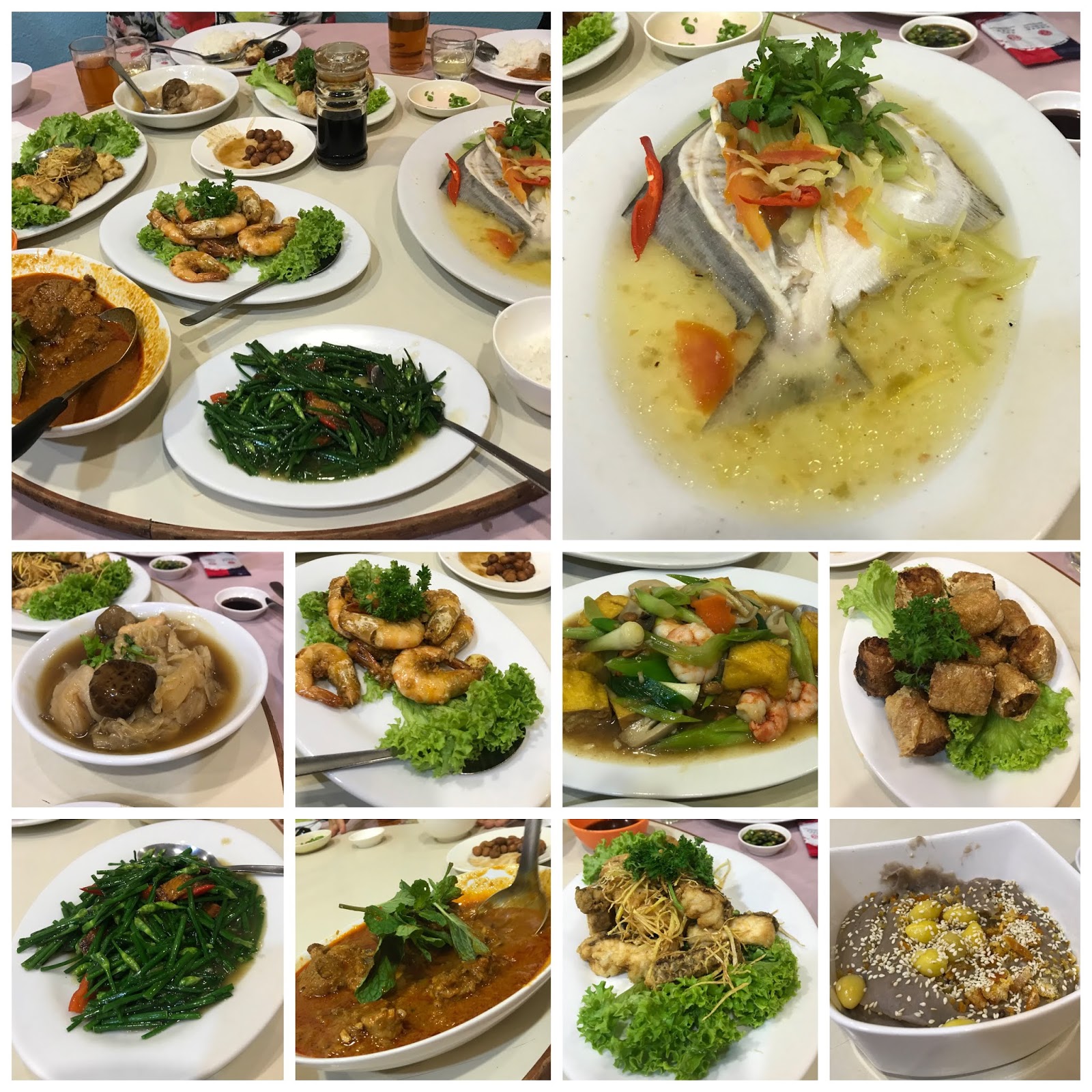
Food as can be imagined played an enormous part. We'd been winding Indy up in particular and had many (far too many) gastronomic events. The one he'd been looking forward to the most was the seafood dinner with congee as the last course that I'd told him about. It was again terrific. Our friends Lisa and Ted came along with us too as it needed to be a big affair so we could order enough things. I shouldn't have worried!


Like I said before, it all seems such a long time ago. The virus here has formally put us into lockdown nationwide until 31st March but today's paper suggested that may have to be extended to 60 days as people here keep gathering together contrary to health warnings about the virus' spread. We don't plan to be going out anywhere other than for food and other necessary things. Writing this I wonder if the next time I see Charlie, he'll be walking or not.

Doesn't matter, I'll treasure the time they were all here with us. 

Charlie's and my evening ritual


Wednesday, March 18, 2020

Visitors Volume 2

With Dick and Anna leaving, Hannah arrived. Hannah is Viv's god daughter and is on a post university tour around the world. As Hannah's plan was to spend 3 weeks in Hainan Island in China around this time, tacking on a week before would be easy. It didn't turn out that way later on but nobody had heard of coronavirus at that time.

We decided that amongst all the hanging out, eating and drinking we'd also head off for some outings and as Hannah's degree was to do with marine biology and environmental protection, we thought take her out for some animal-y things, starting with the butterfly farm called Entopia.

This was the first time we'd been there and it was really good. Lots of butterflies of course but also the big monitor lizards and other things were there too. Sort of an aquatic zoo as opposed to an aquarium.

Clever, they had laid out these hibiscus flowers and covered them with I think honey so the butterflies swarmed all over them for the benefit of we patrons to enjoy


Another day we drove out to Bukit Merah to check out the orang utans again. We'd done this before with Hannah's mum and it was really nice to go back particularly when we ran into one of the celebrity occupants who was riveted by the actions of a workman and tracked what he was doing. We'd had virtually no rain for months by this point so the lake in which the orang utan refuge island stood was at a very low level exposing lots of the foreshore. As there had been a fire at the centre a short while before, there was plenty of debris lying around and it was this that the workmen were clearing up.

I watched for ages and of course this is ridiculous but after a while I had the notion that I knew what the orang utan was about to do. I used the 'well of course their DNA is a 97% match to humans' hypothesis for my incredible scientific breakthrough, but its true. I just knew that when the workman got close enough, the orang utan would just scrabble away at the sand and throw a handful at him. And he did! Really hilarious to watch!!


Mind you, I didn't share this mind meld that I had just experienced with anyone else. I kept that to myself.

We also went back to Kee Lok See temple at night to check out the lights which were truly spectacular. This time we climbed the 7 storeys of the pagoda and were rewarded with fantastic views. The lights were terrific.


All along Hannah had been in touch with the school in Hainan where she was supposed to be teaching English for 3 weeks when all of a sudden she told us there may be a problem with her getting there as there was a disease that was spreading all over, a new type of virus.

We'd heard that there was something going on in Wuhan in China but not much else. However as we all know now, things moved fast from this point and the virus spread out exponentially to the point where the school said sorry, no children to teach so no need to come. I think we were all a bit peeved that that had happened for Hannah's sake not realising the enormity of things for after this cases started cropping up in other countries too. We suggested that Hannah should therefore head south to Australia instead as she had another internship organised in Sydney after the proposed Hainan trip which in the end did happen.

Our farewell dinner -- Korean BBQ
In fact all ended well for Hannah organised a nice road trip along the east coast of Australia to her new internship. Bon voyage and thanks for coming!

Visitors Volume 1


In early January, we'd just returned from spending Christmas in Canada with Dee Dee and the following day Viv's mum Anna moved in, swiftly followed by Viv's uncle Dick a day later. This is Dick's first visit and he hadn't seen Anna for several years. 

It was just before Chinese New Year started (which began in the last week of January and lasted 2 weeks this year). It is the Year of the Rat so everywhere was highly decorated with what looked to me less like rats but more like cuddly-ish mice so everywhere was very pretty and as it is the new year, pretty much everything was cleaned up too.


We did a lot of stuff! 

Georgetown's UNESCO World Heritage Centre was decked out nicely and after a nice walk and some lunch one day we went to the Sun Yet Sen Museum in Armenian Street.

Sun Yat Sen was the father of the Chinese Republic and amongst other places lived for a while in Penang. The object of that really was to raise funds for his next rebellion. He was involved in several unsuccessful ones as well so was a person of interest for the Chinese who after a little while objected to the British about his rabble rousing presence in Penang, whereupon they asked him to move on. In all, he was in Penang for less than one year.


Fascinating museum. Small but amongst it all, you get to learn a bit about Sun Yet Sen the man too, in particular his lady loves which were described in some detail rather surprisingly. Most know him as the revolutionary not the lover, husband and all the rest. However, he was very active and traveled everywhere trying to raise interest and of course funding. One exhibit was set aside just to this; how much he raised and in which country. Remember this is back at the turn of the 20th century so the amounts are of course smaller but the country which provided the most funds for his struggle was..... wait for it.... Canada! Who'd have thought?  

Very nice museum housed in a lovely shophouse in Armenian Street. Well worth a visit!

Viv's tennis friend, Lee Pin, asked us out for a day trip over to the mainland in Butterworth to visit a Chinese temple that was both huge and beautifully decked out for Chinese New Year. We'd never really been to Butterworth other than on that occasion when we'd taken a wrong turning and were headed towards the docks so were keen to check it out. Basically it's just one Main Street with a temple at the end. Big temple though.


Lee Pin had organised a dinner at a restaurant on the beach at Batu Ferringhi with a special dish she wanted us to try (Duck and Yam soup) after the temple but before that she wanted us to try the 'best ' local Rojak. Now when a Penangite says that such and such is the 'best' it of course means in their opinion which again is of course reason enough to try it out. Viv and I had eaten rojak before but not Anna and Dick so this would be all new to them.

The famous rojak kopi (coffee) shop
Rojak
The place was a coffee shop in the middle of Butterworth. Coffee shops like this are where the locals go for dessert and of course the local incredibly black coffee. Beans are roasted in a special way so that the beans are coal black as is the coffee. Not terribly strong but with a definite flavour to which is added condensed milk -- that's for the black coffee which apparently without the condensed milk is rather like engine sump oil. For the white coffee, you add evaporated milk to the mix. Did I mention sugar? Lots of that too. The experience leaves quite a film in and around your mouth for quite some time.

How to describe rojak? It is a popular dessert hereabouts. Take cut up chunks of fruit and raw vegetables and cover it with a sweet and sour but something else thick, sticky, gooey gloop and sprinkle with ground nuts. It is a curious taste to be sure, and not unpleasant. 'Interesting' was a word I heard quite a bit from Dick and Anna.

On the way back we stopped off at the snake temple near the airport for a brief visit. Snakes were everywhere although thankfully not crawling around too much. Just sort of lying there and writhing. I think they all came around one day and nobody cleared them out, so the snakes stayed.


I'd driven through Batu Ferringhi often enough. It's where the tourist resorts are located but as the beaches are pretty awful and the water very muddy brown with pollution and run off from farming on the mainland, we never had any intention of going to the beach. Not after Bermuda anyway! However the restaurant we went to was right on the beach and it turned out to be actually.... really rather lovely: the beach not the water. As was the duck/yam soup and the meal overall. Thanks Lee Pin!

Sunset on the beach at Batu Ferringhi
We also decided to take Dick to the Blue Mansion in Georgetown. He is keen on history and heritage, or at least he said he was so we made sure to load him up on it.

The Blue Mansion
The Blue Mansion is simply extraordinary. The original house was built and lived in by a Chinese guy called Cheong Fatt Tze. A true rags to riches story, he started out as a coolie labourer in Indonesia in the 1870's where he made his first great move: he married the boss' daughter and took over his trading business. 

He was really good at it and moved to Penang because the British were there and more trade was possible. He was into everything, built this mansion and became the wealthiest man in China towards the end of the 19th century. The Emperor even appointed him as special counsellor making him the 3rd most powerful person in China even though he didn't live there. We went on a tour of the mansion which has been massively renovated after it became derelict during WWII when the Japanese arrived. They persecuted important local Chinese people and Cheong's heirs (he was dead by this time) received no favours from them and had to rent out the mansion to several hundred squatters simply to survive. The result was dereliction and the mansion was abandoned for years until private money acquired it and turned it into this lovely museum.

It has been a movie set many times including movies based on the life of Sun Yat Sen but more recently of Anna and the King of Siam. Because the Thai government felt that the movie disrespected the royal family, they refused permission to film in Bangkok so the movie used the Blue Mansion and more generally Penang as the site location for the movie.

Another outing, although not so long but still pretty onerous was visiting the Kee Lok See temple at Penang Hill. It is the largest such temple in SE Asia. For Chinese New Year, they always garland the temple and grounds in flowers, lights and all the other ornate stuff that goes with Chinese New Year so at this time of the year it is definitely worth a visit. Lots of stairs but very worth it.

The seven storey pagoda is a key point in the temple
I think Dick was exhausted by the time he left!!


Visitors, Culture, Eating and ....

I've been lazy in the past few weeks when it comes to writing my blog. For sure we had some visitors... actually quite a lot of visitors, then we moved house, then there was the big tennis tournament that I played in when Viv was away, then I hurt my back .... and then came the coronavirus which has locked us down in out apartment for at least the next two weeks.

Yes, I just slipped that last thing in. My goodness, this is the biggest crisis facing the world probably since WWII and to think I was going to write about the hardships of going out to eat in Penang!

But I'd started and had some really neat photos so I will go ahead and complete the blog but obviously with the benefit of current thinking. Realistically sitting here in our apartment, I would obviously love to go out to restaurants and stuff but that can't happen for a while. I'm still amazed how quickly all this has taken to come to pass when it was only just last week...

Anyhow, here it is:

***

I think we've lived here long enough that the Penang coolaid that we've drunk is starting to take effect. Penang info front and centre always says that Penang is the foodie capital of (1) Malaysia, (2) the Far East, or (3) the world. I don't know about that but recently in some periodical or another (or maybe a Far East food programme on TV), it was announced that either Penang or Malaysia (can't remember which) has 162,000 small holding food sellers.... a better word was used but you can't really call fooderies here 'restaurants' because most aren't. For sure there are restaurants like you'd recognise in the west but they are realistically few and far between. You have boutique fancy restaurants too. Then you go to the non-fancy restaurants that are more like US diners and a couple of further rungs down you get to the hawkers and the guys that prepare food off trolleys (you can't call them trucks). Anyway there's 162,000 of these apparently either up and down the country or in Penang, probably up and down the country now that I think of it.

Hawker centre on Beach Street

It feels like we've visited them all this last week.

Also by some extraordinary combination of events, we have had some of the most stunningly good meals and dishes that we've eaten in the entire time we have been here. So you can't say no to eating them, can you? (That was pretty lame, wasn't it? Even so, 100% true).

We had guests in the shape of Viv's mum, Anna, and uncle Dick from San Francisco so were in tourist mode as well so visited some pretty interesting places too but I'll just keep to the food on this post.

After the obligatory chicken rice on collecting Dick from the airport, we went on a bit of a tour ending up at a local Malay Nonya Indian sort of 'fusion' restaurant which had recipes from all over the region. Called Jawi Restaurant, the chef told us that his people are Indian muslims that came to Penang 200 years ago bringing with them traditional dishes that they made with local ingredients, substituting as needed and intermarrying over the years which brought different ways and means to the cooking. Its in Armenian Street opposite the Sun Yet Sen Museum and was very nice.


Our friends Ted and Lisa had asked us all out to join them at a Teochow restaurant called Goh Swee Kee, a fish restaurant and yet another style of Chinese cooking from the Teochow region. Wonderful fish, amazing pork curry and those veggies!!


Viv's tennis buddy asked us (Viv, Dick, Anna and I) for a day trip that included Dim Sum in Butterworth and another fish restaurant on the beach at Batu Ferringhi where the specialty was Duck and Yam Soup. Talk about hearty!


I took Dick out for a walk around Georgetown that included breakfast and of course lunch. Along the way we found the famous Nasi Lemak stall on Beach Street and some amazing looking tandoori chicken in Little India on Chulia Street.

Banana Leaf, rice cooked with coconut milk (hence fatty or 'Lemak'), dried anchovies, hard boiled egg and a huge dollop of chilli out of those buckets makes Nasi Lemak (aka fatty rice), a spectacular breakfast dish.


We realised that we'd not taken our visitors to any Nyonya Restaurants in Penang. Nyonya are the local Chinese/Malay mix cuisine restaurants. I love the food and Ted and Lisa again found a wonderful place called Aunty Geik Lean's Old School in Georgetown. I'd walked past this place dozens of times and never realised I should have stepped in for the fish and indescribably good pork curry.


Then there was the 'quiet' dinner at the Penang Swim Club and the huuuuge Korean BBQ that we went to with our friend's daughter, Hannah...


I felt like a balloon at the end of all this.


Wednesday, January 1, 2020

Hills

Like many people, I try to make plans. In my case as I am retired, this often involves great ideas (in my opinion) that may or may not require preparation before the big event whatever it is takes place.

A few weeks ago after a tough day of playing in a tennis tournament, I was chatting with one of the players, the club pro, bemoaning the fact that I wasn't able to hit the tennis ball as hard as the young lads who'd thumped us all over the court all day. He put an arm round my shoulders in an amicable fashion, patted my stomach with the other and kept on saying what sounded like "20 pounds" over and over. Being rather a literal person I hadn't a clue what he meant but assumed that he meant that I should start pumping iron to build up some more muscle. He is as skinny as a rake so I thought this was a bit rich coming from him. In any event he kept droning on about '20 pounds, 20 pounds' and drumming my tummy so I said something along the lines of 'OK, you're right maybe I could do something about my puny arms...' but he said "No, no. Lose 20 pounds. Here".... with 'here' being you guessed it, my stomach. Bloody cheek. I've been trying to lose 20 pounds for the last 20+ years, mate!

In my defense, the food in Penang really doesn't help. So good but very heavy on the carbs: rice, noodles, beer. I know I could be a little more iron willed but that really hasn't worked out that well. Clearly.

The most recent fiesta and the scene of my most recent fall from grace
So plan B.

Penang Island is a really interesting place. Topographically speaking. This is what Wikipedia says:
As for the terrain, much of the centre of Penang Island consists of granitic hills covered by rainforest jungles. The central hills of Penang Island, including Penang Hill, serve as a giant green lung for the entire island and an important forested catchment area.[15]

Generally speaking, the island can be distinguished into five areas:
  • The northeastern plains form a triangular promontory where George Town is centred. This densely populated city centre is the administrative, commercial and cultural centre of Penang.
  • The southeast, where Bayan Lepas is located, was once an agricultural area consisting of rice fields and mangroves. Due to the massive industrialisation of the 1970s, this area has been developed into new townships and industrial areas.
  • The north, including Batu Ferringhi, Tanjung Bungah and Tanjung Tokong, consists of narrow sandy beaches lined with resort hotels and residences that form the northwestern edge of George Town.
  • The southwest (Balik Pulau) contains the only large pockets of scenic countryside with fishing villages, fruit orchards, and mangroves.
The giant green lung
We live in the north of the island which is well populated but in the middle and south, the hills go straight up making construction difficult. So much so that the authorities are reclaiming ever greater chunks out to the north and east which constitutes the Malacca Straits, which are actually quite shallow and very tidal.

The British in colonial days built stations in the hills where you can escape the relentless heat of the lowlands. They also built reservoirs and dams in the hills to provide a guaranteed water source for the island. Accessing each of these meant trails, roads and paths which today make great hiking trails. This was my plan B.

I found a group of hardy hikers who weren't so serious that a newbie like me would suffer and off we went. The first week's walk was to the Batu Ferringhi aqueduct. A light, gently upward stroll past the remnants of colonial engineering which still works just fine. My fellow walkers were a bunch of similarly shaped and aged people to me, so I felt right at home. 


It was all rather pleasant. People chatted, stopped every 20 minutes or so for a rest and drink, that sort of thing. And right at the end we met that charming monkey. The white eyed ones are quite affable unlike the grey macaques that predominate, which travel in large groups and which are aggressive. This is why most walkers go on hikes with sticks.

It was therefore with quiet confidence that I approached the next week's walk. One of the guys that also plays tennis told me that this wasn't a really heavy walk in terms of difficulty, maybe 7 out of ten, so I was felt pretty good about things as I drove down to the southern part of the island; a village called Balik Pulau. The plan was to start in the village, walk through some of the farms and then take to the hills. The hills are all interconnected so a really long, tough one would head all the way north towards Penang Hill. We wouldn't be doing that although we would be going up through the durian farms.

I was in bits at the end.


Scenery was lovely and what I clearly missed were the breaks for chats and drinks. None of the more social walkers had chosen to do this walk this time, I had missed that! The hardy bunch that did make it were all lithe and athletic looking and obviously used to this kind of thing.

Lovely scenery though!